


CNC machining in 2026 is becoming more connected, automated, and data-driven.
AI is moving into daily machine control, digital twins are linking design with inspection, sustainability is becoming a shop-floor KPI, and reshoring continues to change sourcing decisions and capacity planning across the CNC machining industry.
This guide explains what these shifts mean for lead times, quality, cost, supplier selection, and process planning, so you can evaluate machining partners with clearer priorities.

Key findings:
- AI-powered CNC machine market grows from USD 4.11 billion (2024) to USD 8.22 billion (2032) at 10.8% CAGR
- Reshoring brought 244,000 manufacturing jobs back to the US in 2024 alone, cumulative total exceeds 2 million since 2010
- MQL systems reduce coolant consumption by 95% compared to traditional flood cooling
- Hybrid manufacturing achieves 85-95% material utilization versus 15-40% for pure CNC on complex parts
1. AI-Native Machining Moves to Production Standard
From Pilot to Daily Operation
Artificial intelligence in CNC machining crossed a threshold in 2025-2026. What was experimental in 2023-2024 — isolated monitoring tools, academic pilots, proof-of-concept dashboards — is now embedded in daily machine control and process planning.
AI-driven machining systems use real-time sensor feedback to adjust feeds, speeds, and toolpaths during the cut, not after. The system responds to vibration, spindle load, or temperature changes as they occur. Dassault Systèmes’ DELMIA team notes: “AI-driven machining uses real-time sensor feedback to adjust feeds, speeds and toolpaths automatically, responding to vibration, load, or temperature changes as they happen. The result is more consistent surface quality, lower tool wear, and fewer production halts.”
Market Validation
The global AI-powered CNC machine market was valued at USD 4.11 billion in 2024 and is projected to reach USD 8.22 billion by 2032, growing at a CAGR of 10.8%. [2] This nearly doubling in eight years reflects movement from early adopter to mainstream deployment.

Deployment at HMaking
Three AI-assisted systems are now operational on our production floor:
Predictive Tool Wear Monitoring
- Sensors monitor spindle load, vibration, and acoustic emissions during every cutting cycle
- System triggers automatic tool change before quality degradation occurs
- Machine Tool News reports early adopters see tooling cost reductions of 20-30% through this approach [3]
- Our scrap rate on repeat orders: below 0.8% versus industry-typical 2-3%
Adaptive Feed Rate Optimization
- System modulates speed based on material hardness variations within a single workpiece
- On Inconel 718 parts with varying cross-sections: 15-18% cycle time reduction while maintaining consistent surface finish
- Particularly effective on castings and forgings where material hardness varies
Real-Time Quality Prediction
- Correlates process parameters (spindle current, temperature, acoustic signature) with post-machining CMM inspection results
- Predicts dimensional deviation before part leaves the machine
- Catches drift early, reduces scrap and rework
What This Means for Buyers
When evaluating CNC machining suppliers in 2026, ask about AI integration level. Shops running AI-native workflows typically deliver:
- More consistent part-to-part quality across batches
- Fewer unexpected delays from tool breakage or machine downtime
- Shorter lead times on complex multi-operation parts
- Better traceability with automated process logging
Question to ask your supplier: Do you use real-time adaptive machining, or just post-process analytics?
2. Digital Twins Become the Production Backbone
From Static Simulation to Living Model
Digital twins — once a buzzword for 3D visualization — are maturing into operational ecosystems that mirror the entire machining process. In 2026, the digital twin no longer just visualizes toolpaths before cutting. It integrates design, process engineering, machining, and inspection into a continuously updated model.
DELMIA’s 2026 trend analysis states: “Instead of merely visualizing toolpaths, the 2026 digital twin will integrate design, process engineering, machining, and inspection into a continuously updated model.” [1] This shift closes the loop between what was programmed and what actually happened on the machine.
Implementation Results at HMaking
We deployed digital twin workflow for an aerospace customer program in 2025. Measurable changes:
| Metric | Before Digital Twin | After Digital Twin |
|---|---|---|
| Toolpath validation | Simulated once before machining | Continuously validated against actual machine behavior |
| Inspection correlation | Reviewed after batch completion | Real-time correlation during production |
| Process adjustments | Reactive (after issues occur) | Predictive (before issues occur) |
| First-article pass rate | 78% average | 94% average |
Specific incident: The digital twin caught a potential collision between the rotary table and workholding fixture that static CAM simulation missed. The twin incorporated actual thermal expansion data from previous runs on the same machine — data that static simulation does not include.
Why This Matters for Your Projects
Digital twin capability reduces first-article iteration cycles. Instead of machining a prototype, inspecting, finding issues, reprogramming, and machining again, many issues are caught in the virtual model before metal is cut.
This matters even more on complex aerospace machined parts where setup cost, tolerance risk, and first-pass success directly affect schedule and part cost.
Question to ask your supplier: Can you show me how my part will behave on your machine before cutting metal?

3. Sustainability Metrics Become Core Machining KPIs
From Corporate Report to Job Traveler
Sustainability in CNC machining moved from annual corporate sustainability reports to daily operational KPIs in 2025-2026. Environmental performance is now tied directly to operational efficiency and customer value. [1]
EU customers increasingly require carbon-footprint data per component as part of supplier qualification. Our tracking methodology complies with:
- ISO 14064: Greenhouse gas accounting
- ISO 14067: Carbon footprint of products
- GHG Protocol: Leading global standard for carbon accounting [4]
Three Technologies Driving Sustainable Machining
Minimum Quantity Lubrication (MQL)
- Delivers lubricant in precise milliliter quantities directly to cutting edge
- Uses 95% less coolant than traditional flood cooling [4]
- At HMaking: switching aluminum machining lines to MQL reduced coolant purchasing costs by approximately 70%
- Eliminated coolant-related skin irritation complaints from operators
Dry Cutting
- Eliminates cutting fluids entirely for certain materials and operations
- Relies on specialized tool coatings (TiAlN, DLC) and optimized tool geometry
- Particularly effective for: aluminum alloys, cast iron, short-chipping materials
- Our dry cutting line for 6061 aluminum bracket production: zero coolant procurement cost, simplified post-machining cleaning
Scrap Recycling Integration
- Closed-loop recycling for high-value alloys becoming standard
- HMaking’s on-site scrap segregation achieves:
- 98% material recovery rate for aluminum
- 95% for steel
- Dedicated recycling channels for titanium and Inconel scrap through specialized foundry partners [4]
Economic Reality Behind Sustainability
Sustainable practices often reduce costs, not increase them:
- MQL cuts fluid purchase and disposal costs
- Optimized toolpaths reduce energy per part
- Scrap reduction lowers material waste
- Dry cutting eliminates coolant procurement and disposal entirely
Sustainability is not just good ethics — it is good economics. It also increasingly affects how buyers evaluate CNC machining cost and long-term supplier value.

4. Automation and Reshoring Drive the New Machining Economy
Reshoring Numbers
The data is striking:
- Reshoring brought 244,000 manufacturing jobs back to the United States in 2024 alone
- Cumulative total exceeds 2 million since 2010 according to the Reshoring Initiative’s annual report
- Nearly half of US businesses plan to increase nearshoring in 2026
Three practical concerns drive reshoring decisions:
- 45% want manufacturing closer to engineering capability
- 45% want to reduce freight and duty costs
- 38% are actively trying to reduce geopolitical risk
What Reshoring Means for CNC Machining
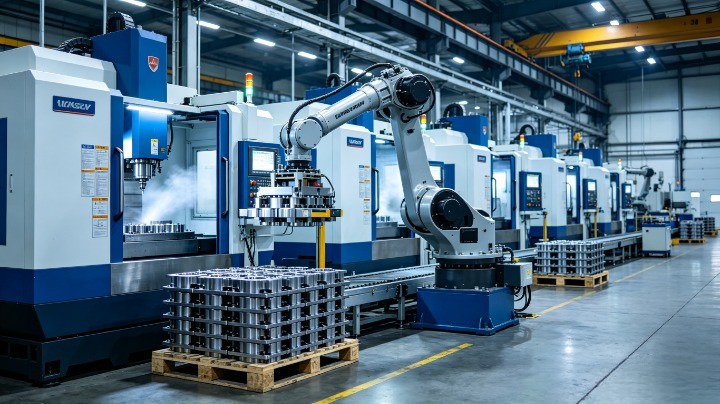
Reshored facilities are built around automation from day one. KORE1’s 2026 reshoring analysis notes: “Every new facility needs process design from scratch” and “reshored plants are built around automation from day one.”
Opportunities for buyers:
- Domestic and nearshore CNC suppliers offer faster communication
- Easier site visits
- Stronger IP protection
- Shorter shipping distances (DDP shipment from China to US warehouse: 15-30 days; reshored US-based supplier: 2-5 days for urgent orders)
Challenges:
- Reshored facilities face skilled labor shortages
- Manufacturing engineer roles projected to grow 9% through 2034, with 18,100 annual openings projected nationally [7]
- Capacity constraints at new reshored shops may create longer lead times than expected during ramp-up
HMaking’s Position on Reshoring
We see reshoring as complementary to our China-based operation rather than purely competitive. Many customers maintain a hybrid strategy:
| Application | Recommended Approach | Rationale |
|---|---|---|
| Prototype and low-volume | HMaking in China | Cost-effective rapid prototyping (3-7 day lead time) |
| Volume production with urgency | Reshored partners | Time-critical production runs |
| Large-volume stable demand (500K+ units) | HMaking in China | Economies of scale |
This hybrid approach gives buyers flexibility that pure reshoring or pure offshore cannot match alone. It also aligns with how many teams now manage prototype vs production CNC machining across different supply-chain models.
5. Hybrid Manufacturing Redefines What Is Possible
The Hybrid Workflow
Hybrid manufacturing — blending subtractive (CNC) and additive (3D printing) processes — is gaining momentum in 2026. By combining additive build-up of near-net-shape features with precision CNC finish machining, shops produce geometries previously impossible or prohibitively expensive with subtractive methods alone.
Typical hybrid part workflow at HMaking:
- Additive phase: Build near-net-shape preform using metal 3D printing (typically DMLS or binder jetting), leaving 0.3-0.5mm stock for finishing
- CNC phase: Machine critical surfaces to final tolerance (±0.005mm achievable)
- Inspection phase: Full CMM verification against original CAD model
Comparative Metrics
| Metric | Pure CNC | Hybrid (Additive + CNC) |
|---|---|---|
| Material utilization | 15-40% (rest becomes chips) | 85-95% |
| Lead time for complex internal features | 2-3 weeks (multiple setups) | 5-7 days |
| Cost for topology-optimized parts | Very high (extensive roughing) | 30-50% lower |
| Design freedom | Limited by tool access | Nearly unlimited |
Who Benefits Most
Hybrid manufacturing is particularly valuable for:
- Aerospace brackets with internal lattice structures
- Medical implants requiring patient-specific geometry
- Automotive lightweighting components with organic shapes
- Heat exchangers with complex internal channels
HMaking added metal 3D printing capability in late 2025 specifically to serve customers who need these hybrid workflows.
The Common Thread: Integration
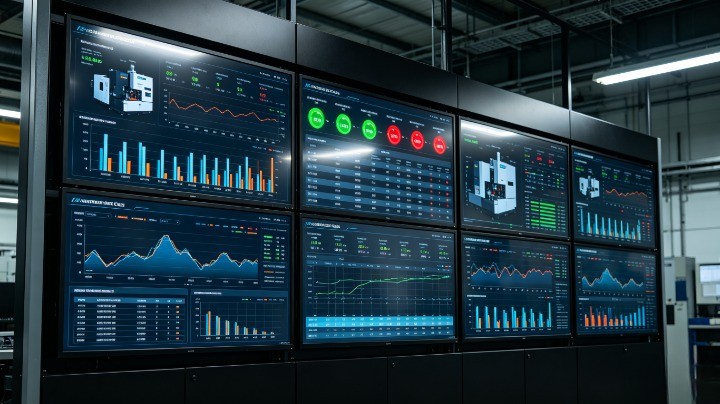
The common thread across all five trends is integration. CNC machining in 2026 is defined by connected, data-driven workflows rather than isolated machines making parts in isolation. DELMIA’s analysis concludes: “The factories that thrive will be those that treat every machine cycle as a data event — captured, analyzed, and used to improve the next.”
How HMaking Is Preparing
Investment status across all five trends in 2026:
| Investment Area | Status | Expected Completion |
|---|---|---|
| AI-powered predictive maintenance rollout | In progress | Q2 2026 |
| Digital twin integration for aerospace line | Pilot phase | Q3 2026 |
| MQL expansion to all aluminum lines | 80% complete | Q2 2026 |
| Automated pallet changer installation | Ordered | Q2 2026 |
| Metal 3D printing cell (hybrid) | Operational | Already live |
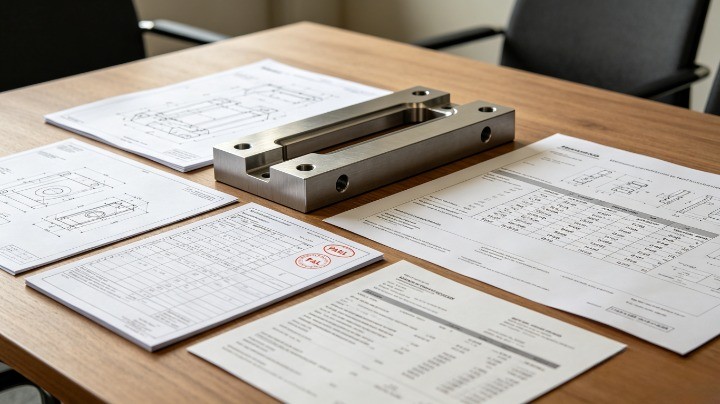
This kind of integration also changes how buyers should review supplier capability, from quoting and DFM through process control and final quality control workflow.
Conclusion
The CNC machining industry in 2026 is more intelligent, more connected, and more conscious of its environmental footprint than ever before. AI is moving from prediction to adaptive correction. Digital twins are closing the loop between programming and actual machining behavior. Sustainability metrics are sitting alongside dimensional tolerances on every job traveler. Reshoring is reshaping supply chain geography. Hybrid manufacturing is opening design possibilities that did not exist five years ago.
For buyers of precision machined parts, these trends create both complexity and opportunity. Complexity because supplier selection now requires evaluating technological capability alongside price and lead time. Opportunity because the shops that master these trends will deliver better parts, faster, with more transparency than ever before.
Contact us
HMaking combines 20+ years of CNC machining experience with forward-looking technology adoption across AI, digital twin, sustainability, automation, and hybrid manufacturing.
Send us your drawings or CAD files. We will review your project and provide:
- Free DFM analysis
- Detailed quotation with lead time
- Recommendation on optimal manufacturing approach (pure CNC, hybrid, material selection)
Contact us today and send your drawings.