


When it comes to making products, you’d find that the smallest components often tend to be what make the biggest differences. And, in the case of rivets, we can clearly see that this is true.
They might not be the largest components of any product assembly setup, but rivets do a great deal. In this article, we’ll explore these materials, as well as the different types that are available to you.
The Different Types Of Rivets Available For Manufacturing

Before we go any further, let’s look at the different available rivet types to provide some clarity:
The Solid Rivet
Whenever you think about a rivet, there’s a considerable chance that you’ll be thinking about this one. The solid rivet is notable for being one of the original riven options – before many custom rivets started being developed.
Here, you have a single shaft with a cylindrical body that also comes with a head on one of its ends. You essentially take the other end that doesn’t have a head, deform it, and the installation is done from there.
Most solid rivets are used for applications like building ships, building construction, and more.
Blind Rivets
If you’re not familiar with the blind rivet, then you might be familiar with the pop rivet. Well, they’re pretty much the same thing. These rivets come with tubular bodies, as well as a mandrel that runs through their centers.
For installation, the blind rivet is placed in one side of the workpiece, where it can offer a reliable and sturdy joint. These rivets have varying applications, from working in sheet metal applications and also in the construction industry.
Drive Rivets
When it comes to rivets that have been modified to fit specific shapes, drive rivets are quite popular. They are very similar to the solid rivets, although they differ in the sense that their mandrels are short and pretty much extrude out of the rivets’ bottoms.
In most cases, you will find these rivets being used to attach things like panels and signs. And whenever you need to build a solid connection that can’t be tampered with, this rivet type is perfect for you.
Tubular Rivets
With their hollow bodies, these rivets are notable because they make it very easy for you to compress them. Some people know them as clothing rivets or round rivets, and they come with either round or flat heads that make them perfect for mostly light applications – making leather, making clothes, etc.
Split Rivets:
The name “split rivet” actually comes from the working principle of this rivet type. These are rivets with two legs, which essentially split open once the entire rivet itself has been put in a hole.
Split rivets are pretty small rivets, and they mostly work to help join pieces of leather to similar fabrics.
Multi-Grip Rivets
With a multi-grip rivet, you have a rivet option that essentially works with different grip lengths. This means that the rivets can handle different materials, regardless of how thick they are.
This is one of the most versatile types of rivets, and it works to help eliminate the need for different sizes – or, at the very least, reduce your reliance on them. As long as you know that you’re working with different material thickness options, the multi-grip rivet is quite effective.
Oscar Rivets
The Oscar rivet comes in a similar shape to the blind rivet. The difference, however, is that these tend to come with broad, flat heads. This micro rivet also helps in combining materials, and it is known to be quite effective in that regard.
These rivet types are mostly applicable in the aerospace industry, where you need to keep proper control over appearance and general material aerodynamics.
Flush Rivets
The flush rivet comes with a head that is perfectly placed within a workplace’s surface. This position provides a smooth and reliable finish that performs different aerodynamic features, and like the Oscar rivet type, this one also works well in aerospace functionalities.
Structural Rivets
These rivets are known for their impressive physical strength. The addition of a locking mechanism also means that these rivets can provide additional durability and strength to your build.
Unlike other decorative rivets for leather and associated materials, this rivet works perfectly in situations where you need the right levels of structural integrity.
Shoulder Rivets
The shoulder rivet comes with the traditional rivet shape. However, unlike many other rivets and pins, these come with extended shafts that stand between their heads and their shanks. This intricate design makes the shoulder rivets stronger, making them perfect when you have load-bearing needs. Hence, the name “shoulder.”
This rivet type works in different industries where you need to hold a lot of weight – automotive, electronics, industrial machinery, you name it.
Drive Screw Rivers
If you’re ever looking for custom rivets, then driver screw rivets are the perfect example.
Here, you have a rivet type that pretty much combines the functionality of screw rivets and drive rivets. With their threaded shafts, they can grip workpieces better. And, this makes them perfect in applications where you need proper screwing and riveting.
HuckBolts
Also a popular type of rivet, these share a lot of similarity to the blind rivets. However, the installation process of this rivet type requires a special tool that helps to swage the pin, thus creating a permanent joint that can resist vibrations.
These rivets are also notable for heavy-duty uses, so they’re quite notable.
An Overview Of Rivets

Now that we understand the different types of rivets, let’s take a quick second to understand what these materials are and how they have become so prominent.
A rivet is a tool that helps in fastening. Built with optimal mechanical in mind, rivets help to combine more than one piece of material, making it much easier for you to completely fast-track your product development process.
We see rivets in different industries, where they help to make a difference. Whether you need a large flange rivet that can join different massive structures or small rivets that work on much smaller scales, these materials are quite effective across the board.
Whether it’s pull-through rivets or some other format, you mostly see these tools coming with the following components:
- The Head: Starting, we have the head of the rivet. Most rivet types come with large heads that are flat as well. When you install a rivet, you press down on the head, forcing the entire material through the hold.
- The Rivet Shank: Also known as the body or the riven handle, the shank acts as a cylindrical part of the structure that eventually runs through the holes in the materials. So, when you press on the head, the rivet handle is what passes through.
- The Final Stem: Finally, we have the stem. This is the part of the rivet that doesn’t have a handle. And when the rivet is passed through the material, the stem – or the tail, if you will – is what will come out at the other end.
How Do Rivets Work?
Next, let’s take a quick second to answer the popular question, “How do rivets work?” Generally, the process of working with these materials goes thus:
Start by Drilling A Hole
Where would you like the rivet press to pass? Set the holes, and make sure that you have a group of aligned accurate connection rivet sets.
Place The Rivet In
Once the hole is right, out the rivet and let it pass through. As you can imagine, a rivet press can also be used to ensure a seamless insertion.
If The Need Arises, Add Some Force
If the rivet passing isn’t seamless enough, then you might need a little bit of force. Once it gets through, get a rivet gun to add some force to the material’s tail. This force will also cause the tail to be deformed, making a second head and forcing the materials to be clamped together.
This deforming process usually involves different methods, all based on the type of rivet you’re working with. For instance:
You will need to either hammer the tail or press it mechanically if you’re working with a solid rivet.
As for blind rivets, you’ll need to pull a mandrel through the body of the rivet, thus causing the deformation that is needed to form that second head.
Set The Joint & You’re Ready
With one solid head and a second deformed one, the entire joint for the rivet is secured, and you’re left with a solid connection.
Materials Used For Rivets
Generally, you have different materials that can be used to make rivets. These materials can vary based on what you’re trying to use the rivets for, but the major options you have include the following:
- Pure Steel: Generally, steel rivets could be broken into carbon steel or steel alloy. These rivets are known for their strength and ability to resist corrosion.
- Aluminum: Aluminum is known to be corrosion-resistant and light – plus, the density of aluminum also makes it perfect for making materials like rivets.
- Stainless Steel: This material is corrosion-resistant, while also being very strong.
- Copper & Its Many Alloys: There are so many alloys of copper today. And, any of them can be used to make metal rivets. Besides their strength, they also look quite nice.
- Titanium: Titanium provides a hard-to-beat combination of strength, corrosion resistance, and low density. This mix makes it perfect for making rivets.
Major Applications Of Rivet Types

Despite being relatively small, rovers have become a staple in the manufacturing industry. These materials work
Rivets are incredibly versatile and multifaceted materials. They take on so many functionalities, with some of those including the following:
- Use In The Building Space: Believe it or not, rivets are used in forming the structural aspects of bridges, buildings, and more.
- Aerospace Manufacturing: Planes need to be light – and this means that their components need to be light, too. Rivets easily slot into this functionality.
- Car Making: When vehicle manufacturers need to join automotive parts like frames and panels, they tend to turn to rivets.
- Building Ships: Here, rivets lend two things to ships – their lightweight build and their ability to resist corrosion.
- Railway Applications: Just as you get with ships, rivets also help to join the components of railcars and other structural elements that are incredibly useful in this space.
- Making Electronics: If you need to secure circuit board components or join materials that work in electronic devices, then rivets come in handy for sure.
- Making Consumer Goods: Whether it’s in making furniture or metal sheets that are used to develop some of the products we see around, rivets also come in very handy.
- Use in The Fashion Space: Rivets are a critical part of making fasteners and closures for cases, bags, and other accessories that we see around as well.
Other areas where these products tend to find applications include the oil and gas space, medical and orthopedic appliances, defense and military applications, oil and gas rigs, and so much more.
How Do You Choose The Right Rivet For You?
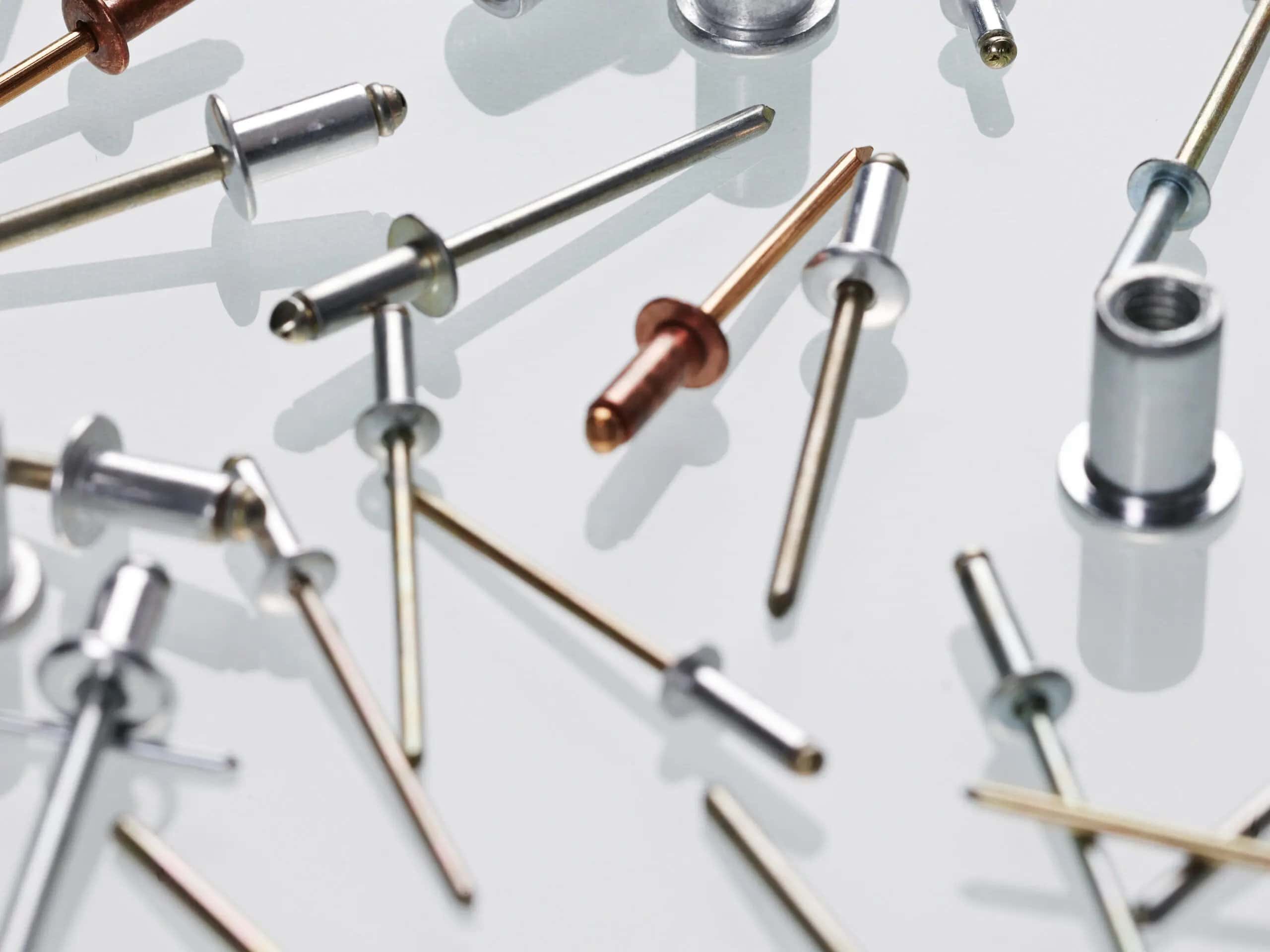
As you can already see, there are so many types of rivets available. And if you’re looking to make a choice, you need to be especially careful of the option you select. The following factors can help you to potentially make a decision.
Understand What You Need It For
As you would imagine, the very first thing you need to understand is what you need a rivet for. This way, you’re able to understand the requirements for your application and choose the rivet type that meets these needs.
Which Materials Are You Working With?
Generally, we would recommend that you choose a rivet material that works well with the other materials you’re handling. There are several options, so be very careful here.
Discover The Type Of Joint
Next, find out what type of joint you’re trying to create. You can make different joint configurations with different joint styles, so understanding the right combination will be critical here. And, it’ll make it much easier to use your riveting machine when everything is in sync.
How Large Should It Be?
When it comes to rivets, size matters a lot. Things like length, diameter, and more will need to be considered, and the goal is to get a rivet whose size easily matches the thickness of the two materials you’re trying to combine.
Can It Handle Loads?
Depending on what you’re trying to do, you might need a rivet that achieves optimal load-bearing capacity. Decide on what your application requirements are, and it should be considerably easier for you to decipher what you need.
How Do You Install It?
Your rivet type needs to be able to be installed seamlessly. Whether you’re riveting with your hands or using a riveting machine, ensure that the installation method is as easy as possible.
Conclusion
Rivets have become a notable part of product manufacturing over the years. And when you consider the benefits that they provide, it’s easy to see that this trend isn’t stopping anytime soon.
If you’d like to learn more about them or get your hands on quality rivets, then HM is where you want to be. Reach out to us today, and let’s know how to help you.