


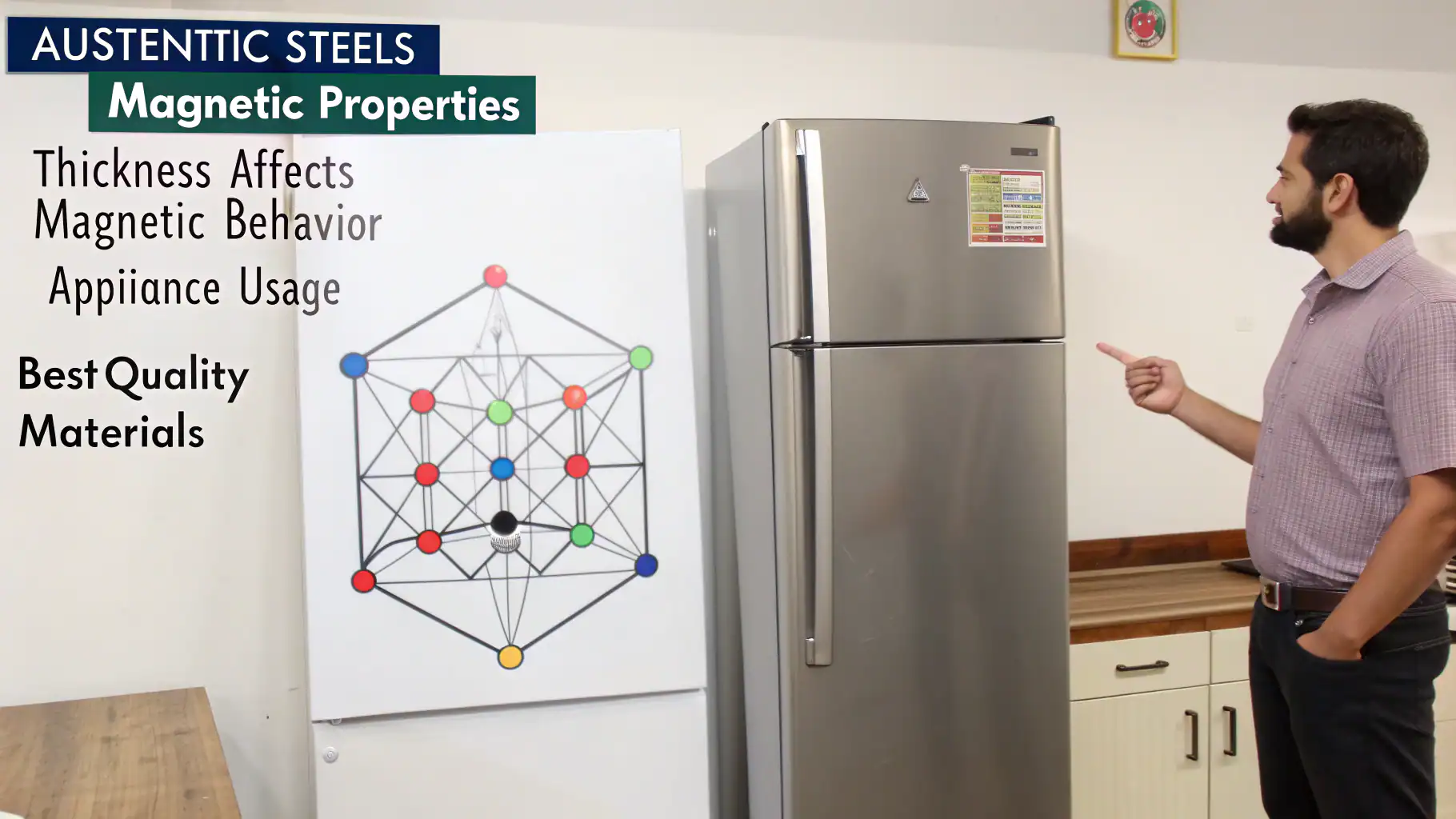
Fridge magnets and stainless steel
Have you ever wondered why your magnets don’t stick to your stainless steel fridge? This common question hides a fascinating world of metal properties that can surprise anyone.
Magnets do not stick to stainless steel because many types, especially austenitic steels like 304 and 316, are generally non-magnetic due to their unique crystal structure.
Understanding the magnetic properties of stainless steel is crucial for anyone looking to use magnets effectively. In this blog, we will explore which types of stainless steel are magnetic, how thickness affects magnet strength, and tips for using magnets on appliances without causing damage.
Magnets do not stick to stainless steel because many types are non-magnetic.True
Austenitic steels like 304 and 316 have non-magnetic crystal structures.
Understanding magnetic properties of stainless steel is crucial for using magnets effectively.False
Magnet use doesn't require deep knowledge of steel properties.
What Makes Stainless Steel Magnetic?
Stainless steel can be confusing. Some types attract magnets while others do not. Understanding this difference is key to making informed choices.
Certain grades of stainless steel are magnetic due to their crystal structures. Ferritic and martensitic steels, like type 430, are ferromagnetic and can attract magnets. In contrast, austenitic steels, such as types 304 and 316, are generally non-magnetic when in an annealed state. This is because they have a face-centered cubic structure that does not allow for magnetism.
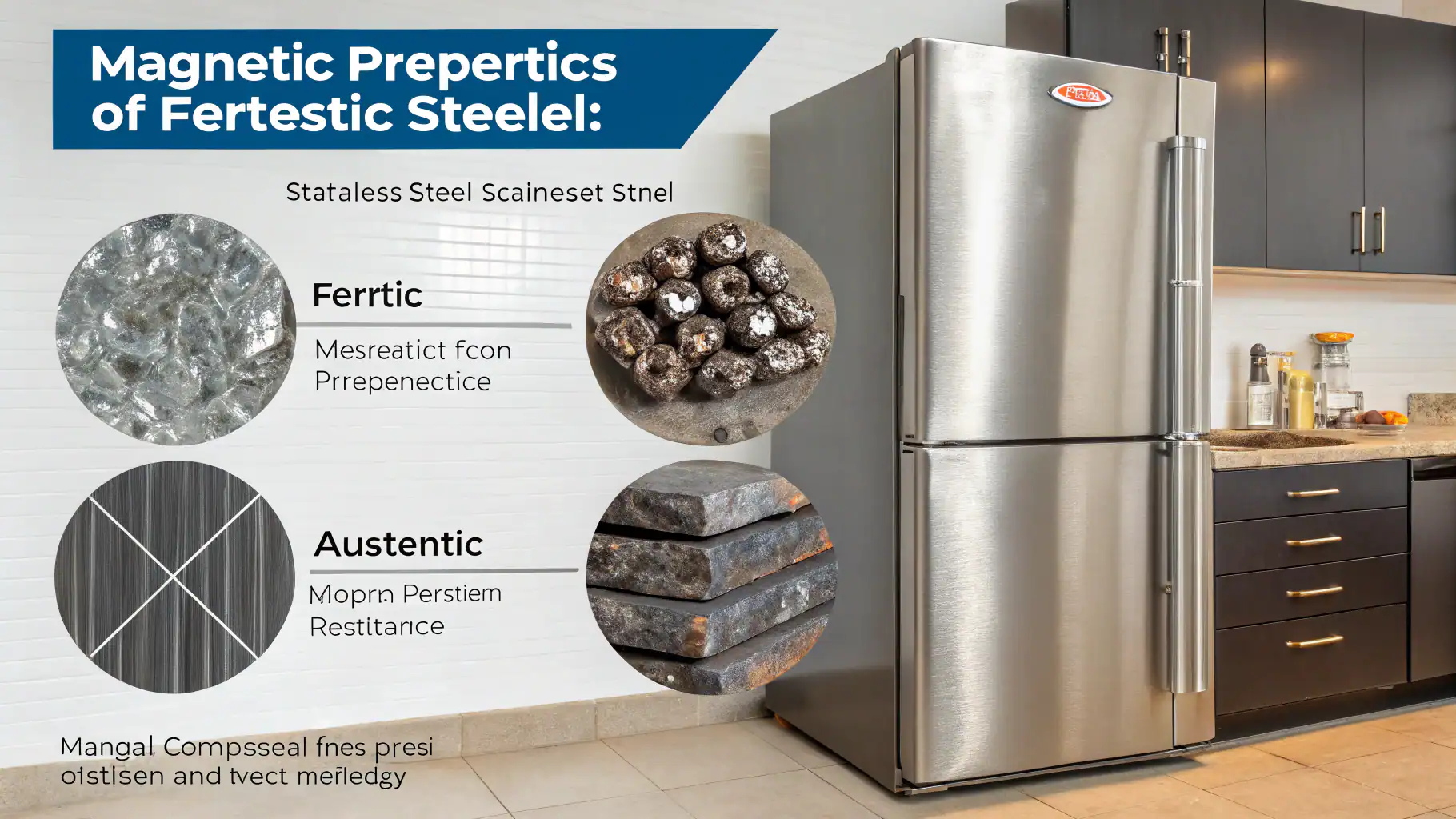
Stainless steel magnetic properties
The magnetic properties of stainless steel depend on its composition and treatment. For example, the presence of iron in ferritic and martensitic grades gives them their magnetic qualities. Meanwhile, austenitic grades have higher corrosion resistance but lower magnetic permeability. Testing shows that the strength of magnets on stainless steel varies from 82% to 99% compared to low carbon steel based on factors like thickness and size. Additionally, paint or coatings can reduce magnet pull force by increasing the distance between the magnet and metal surface. Understanding these differences helps consumers choose the right appliances or materials for their needs.
Ferritic and martensitic steels are ferromagnetic.True
Their crystal structures allow magnetism.
Austenitic steels like type 304 are magnetic in an annealed state.False
They have a non-magnetic face-centered cubic structure.
How to Use Magnets on Your Stainless Steel Refrigerator?
Are you frustrated because your magnets won’t stick to your stainless steel fridge? Discover how to use them effectively without causing any damage!
Many people think all stainless steel is non-magnetic, but that’s not true. Some types, like ferritic steels, can attract magnets. To avoid scratches, use strong magnets and check the fridge’s material first.

Magnets on stainless steel
When using magnets on a stainless steel refrigerator, it’s essential to know the type of stainless steel you have. Most common fridges are made from austenitic stainless steel (like type 304), which is generally non-magnetic. However, if your fridge is made from ferritic or martensitic stainless steel (like type 430), it will attract magnets better.
To protect the surface of your fridge, consider these tips:
- Use thicker or stronger magnets for better adhesion.
- Avoid placing heavy items that could scratch the surface.
- Test different areas of the fridge to find spots where magnets hold well.
Remember that paint or coatings can reduce magnet strength due to increased distance from the metal. Always handle magnets carefully to maintain your refrigerator’s appearance and functionality.
Austenitic stainless steel is generally non-magnetic.True
Type 304 austenitic steel lacks magnetic properties.
All stainless steel types can attract magnets.False
Only ferritic and martensitic types are magnetic.
Why Are Some Appliances Eligible for Discounts?
Are you looking to save money on your next appliance purchase? Discover how Whirlpool offers discounts that can help you get the best deal.
Whirlpool appliances are eligible for various promotional offers, making it easier for customers to save. For instance, new customers can use promo code SAVETEN to receive 10% off their first order until February 5, 2025. Additionally, there are discounts like $100 off when purchasing two appliances or $200 off for three or more with code BMSM. Free delivery is also available on major appliances over $399.

Whirlpool appliance deals
These promotions not only make Whirlpool products more affordable but also encourage bulk purchases. Customers benefit from significant savings while upgrading their home appliances. To maximize these offers, visit Whirlpool’s website regularly and stay updated on any new deals or limited-time promotions. This way, you can ensure you’re getting the best price possible on high-quality appliances that meet your needs.
Whirlpool offers a 10% discount with code SAVETEN for new customers.True
The promo code SAVETEN provides a 10% discount until February 5, 2025.
Free delivery is available on all Whirlpool appliances.False
Free delivery applies only to major appliances over $399.
Can Paint Affect Magnet Strength on Stainless Steel?
Paint can significantly impact the strength of magnets on stainless steel. If you want to keep your magnets strong, consider how paint changes their pull force.

Stainless steel magnets
When paint is applied to stainless steel, it creates a barrier between the magnet and the metal surface. This increased distance reduces the pull force of the magnet. Testing shows that magnet strength on stainless steel can vary widely, from 82% to 99% compared to low carbon steel. The type of stainless steel also matters; for example, austenitic steels are generally non-magnetic while ferritic steels can attract magnets due to their iron content.
Additionally, not all stainless steels are magnetic. Austenitic types like 304 and 316 usually do not attract magnets well. In contrast, ferritic types like 430 are ferromagnetic and can hold magnets more effectively. Therefore, if you plan to use magnets on painted stainless steel surfaces, be aware that both the paint and the type of stainless steel will affect how well they stick.
Paint reduces the pull force of magnets on stainless steel.True
Paint increases distance, weakening magnetic attraction.
Austenitic stainless steels are generally magnetic.False
Austenitic steels like 304 and 316 are non-magnetic.
Conclusion
Stainless steel’s magnetism varies by type; ferritic and martensitic grades attract magnets, while austenitic types generally do not.