


We live in an industrial revolution where automation is the driving force in many sectors. In the initial days of metal fabrication, skilled laborers manually used various tools to form and shape metal into complex designs. But this needed a lot of skill and experience. Besides, the outcome wasn’t always standard.
This led to a revolution spearheaded by CNC machining, which took the metal-cutting industry by storm. In today’s guide, we’ll look at what CNC metal cutting is and everything you need to know about this process.
What is CNC Metal Cutting?

Computer Numerical Control (CNC) refers to the use of computers to automate the control, precision, and movement of machine tools. Therefore, CNC metal cutting is the use of computerized equipment to guide machining tools in transforming metal from a workpiece into a finished product.
CNC metal cutting is made possible through CNC software. CNC software is simply a program made of a set of codes that guide the machining tool to ensure precise, repeatable, and accurate movement.
Before CNC metal cutting became a thing, workpieces were cut manually. Skilled technicians used manual tools to cut and shape metal into different complex shapes. But this process had a few problems; it was highly inaccurate and wasted a lot of time. Besides, there was no uniformity when working on multiple pieces.
CNC machining revolutionized the metal fabrication industry by automating the processes involved. The machines can work on different metal materials, such as copper, aluminum, and brass. They can also work on other materials like wood and acrylic boards.
So, how does a CNC machine work?
How CNC Metal Cutting Works
Modern CNC metal cutting machines are completely automated. They only need CNC software to help the computer instruct the machine on how to move the tool holder and the cutting directions to take.
Machining tools also need various devices to achieve the required shapes and cuttings. Engineers and technicians create software programs that communicate with the physical machine to make this possible.
The CNC metal cutting process starts with creating a Computer-Aided Design (CAD) model. This means using a CAD program to create a 3D model that defines the critical measurements and properties of the physical part.
Some of these programs come in Computer-Aided Design/Computer-Aided Manufacturing (CAD/CAM) to help complete the entire workflow in one program. In such cases, the 3D model from the CAD program is fed into the CAM program which helps create the control instructions for the machining tools.
In some cases, the CAD files have to be imported. However, if the CAD and CAM belong to the same item family, the technician doesn’t need to interpret the files. The CAM program starts by checking for any errors and then creates a program for the CNC machine to create the physical part.
The next step is selecting parameters for the CNC machining tool. These parameters include cutting speed, RPMs, and voltage. These parameters depend on a few factors, such as the available machines and tools as well as the geometry of the part.
After that, the program determines the settling or nesting, which involves outlining the patterns of a cut to reduce the time spent and the amount of waste.
At this point, all this data is assembled into a set of codes that the CNC machine can understand. Some common codes in CNC metal cutting include:
- G-Code– G-Code is the most popular language in CNC machine fabrication. It refers to the geometric code that tells the machine how to move when cutting the workpiece. It also defines the speed at which the cutting tool should move. In essence, G-Code tells the machine what to do and how to do it.
- M-Code– M-Code refers to machine code. Sometimes, it’s also referred to as random code. It focuses on all the details ignored by the G-Code which are the miscellaneous details, such as starting and stopping point.
G-codes and M-codes basically work together to position a workpiece and control the machining tool’s actions.
Are There Different Processes of CNC Metal Cutting?
There are different processes involved in CNC metal cutting. They include:
CNC Laser Cutting
While traditional metal cutting involves curving out the design, CNC laser cutting involves a thermal laser that cuts work metal sheets into finished products. Instead of a cutting tool, a high-energy laser beam is highly focused on the metal sheet, producing metal vapor in the process. There’s high-pressure airflow to help blow out the metal vapor.
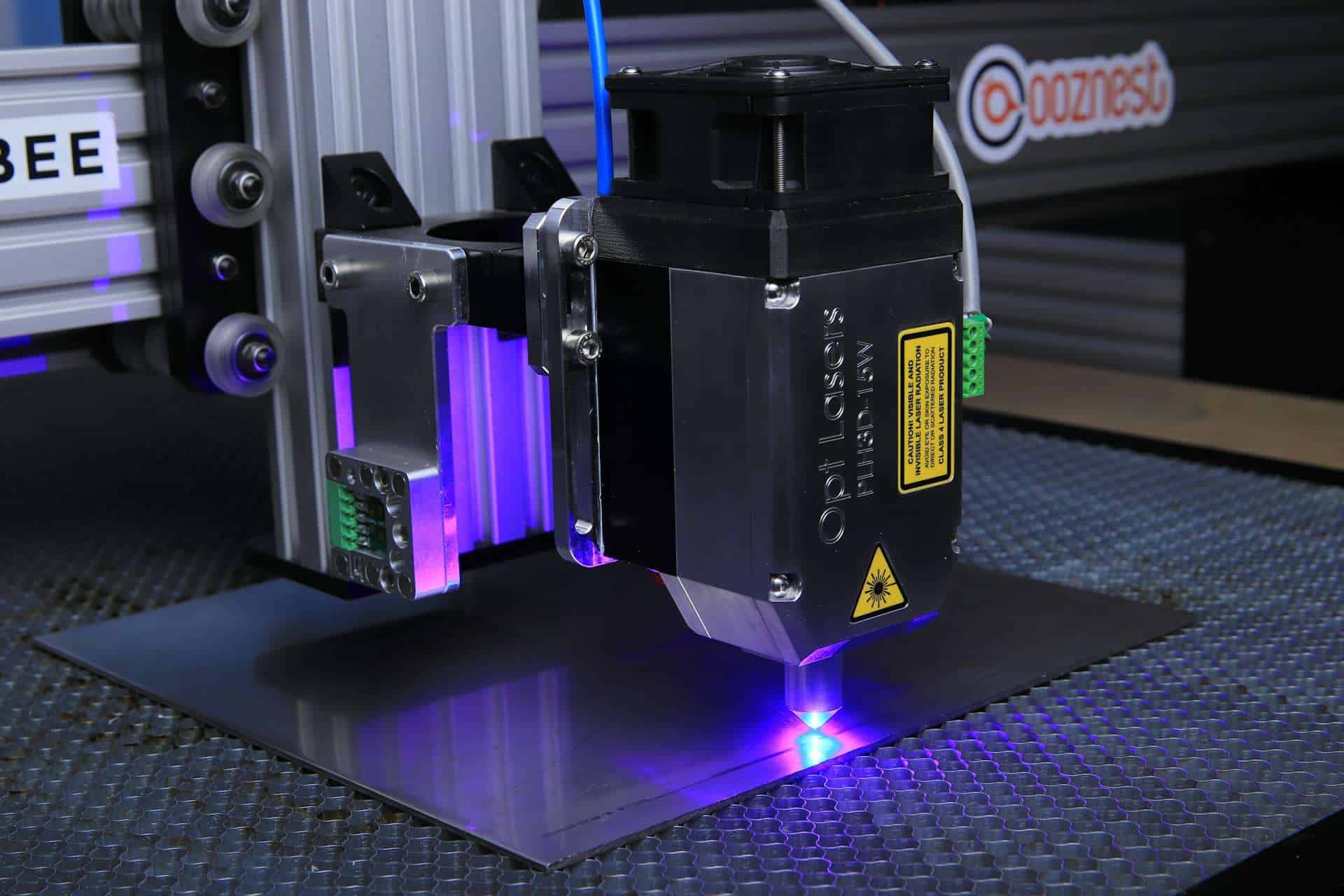
This process is mainly used for cutting metal sheets and other flat materials, such as wood. If you’ve seen some nice metal letters or leather metal art, they’ve probably been shaped using CNC laser cutting.
This method doesn’t work for every application, but its main advantage is that it’s highly accurate. This can be attributed to the fact that a CNC laser cutting machine has limited widths. For example, the technician can set the radius to as little as 0.1mm, achieving highly detailed cuts with utmost precision.
Another advantage is that it provides clean edges that are sealed because the process involves burning. This enhances the appearance of the finished product.
CNC Punching
As the name suggests, this process involves punching holes into the workpiece. The machining tool that carries out this process is referred to as a CNC punch press.
This machine moves the metal in the X and Y directions to position it directly under the punching tool. The punching ram then punches a hole into the metal. This process is fast, accurate, and cost-effective. It also produces considerably less waste.
CNC Plasma Cutting
This process involves cutting through metal using a jet of hot ionized plasma. A CNC software with code directs the hot plasma. Since the material has to be an electrical conductor, common materials cut using this process include aluminum, copper, and brass.
Plasma-cutting machines come in different sizes and for different functionalities. They are highly accurate and result in a high-quality and efficient process. They can cut both thin and thick metal fast.
CNC Milling Cutting
CNC milling is mainly used to make intricate cuts on metal. A CNC software code guides the machining tool to cut the soft parts of the metal workpiece and give it the desired shape with high precision.
There are different CNC milling machines such as vertical, horizontal, and multi-axis milling machines that use different axes to shape the metal. The milling can be done in three different axes; X, Y, and Z. However, advanced CNC machines can mill in up to five different axes, A, B, X, Y, and Z.
Three-axis milling is for simple shapes, while five axes allow manufacturers and fabricators to cut and shape complex parts.
What Are the Advantages of CNC Metal Cutting?
Metal fabrication is often a complex process with many intricate details. The traditional mode of manual fabrication can be time and labor-intensive, yet it doesn’t assure you of the same quality as CNC metal cutting.
That said, CNC metal cutting offers numerous advantages and benefits over manual metal fabrication. Some of these advantages include:
Cost-Effectiveness
CNC metal fabrication cuts costs since you don’t need many manual workers to complete the fabrication. For example, you only need one skilled technician to operate a milling or lathing machine. On top of that, a single technician can oversee the operations of several machines all at once.
Since CNC machines are accurate and precise, you also won’t have to spend a lot of time correcting errors or inconsistencies in the finished products.
CNC machines also cut metal fabrication costs since they reduce material wastage. Manual fabrication has a high degree of human error which often results in a lot of waste, which in turn increases the cost. But CNC metal cutting optimizes the material and helps save costs.
High Level of Precision & Accuracy
One of the most prominent benefits of CNC metal fabrication is the high level of precision and accuracy you get to enjoy. CNC machines can deliver the exact cuts according to the code with a level of accuracy that would be impossible to replicate manually. This feature ensures that the final product is of high quality and meets the customer’s expectations.
This is especially important when you consider the applications of CNC metal products across diverse industries. For example, engine components used in the automotive and aerospace industries require high precision since they’re critical. A small error would mean the engine would be unusable or have catastrophic effects.
Enhanced Efficiency
CNC machine tools can work 24/7 without needing a break or rest. Since they’re completely automated, they don’t need any supervision or human intervention. The only thing a technician needs to do is feed the CNC code into the computer and execute the function. These characteristics result in increased efficiency and faster production times.
Increased Workplace Safety
One benefit of CNC metal cutting that’s often forgotten is the level of safety it brings into the workplace. Traditional manual fabrication involves using heavy machinery and sharp tools to shape metal into a desired product. This method isn’t the safest as it exposes the artisan to various risks.
On the other hand, CNC fabrication fully automates the process and reduces the possibility of injuries and accidents in the workplace.
Bulk Identical Production
The advantages of CNC metal cutting are most prominent when bulk production is involved. CNC machining assures you of consistency and repeatability which is important for bulk part production. In traditional metal fabrication, each artisan has their way of doing things and cutting metal. This means that many products will have slight variations, even if the design is the same.
CNC machining solves this by producing identical products every time. Remember, CNC machine tools rely on inputs and commands, rather than human skills. The inputs direct the movement and ensure the actions are repeated in a loop and at high speeds.
Are There Any Potential Downsides of CNC Metal Cutting?
CNC machining also has its own share of potential downsides that you need to be aware of. They include:
High Initial Cost
While CNC machine tools have lower operating costs compared to traditional manual fabrication, the initial cost can be quite high depending on the type of machine you’re getting.
However, this cost can be considered an investment when you think about the high quality, quick turnaround times, and repeatability you get to enjoy after investing in it.
Needs Technician Training
CNC machining tools aren’t plug-and-play, especially if you’re switching from the traditional manual fabrication method. Your technicians will need CAD training and certification to effectively operate the computers and machines. They’ll also need to train and gain skills on how to operate CNC machines.
In most cases, you’ll need at least two skilled workers to operate the computers and machines; one CNC programmer to enter the code into the computer and another machine operator to oversee the tools processes.
If you’re a small fabrication business, you may only need one skilled craftsman to carry out both tasks.
Workpiece Material and Size Restrictions
Every CNC machine and tool has restrictions when it comes to the materials it can cut and the operations it can carry out. For example, a CNC plasma machine is limited to metal fabrication. You can’t use it when you want to work on other materials such as plastic or wood.
Another limitation is the size of the output. Your model design can be as complex as possible but the sizes will be limited to what the machine and cutting tool can handle. Even larger CNC machines have their own limitations.
This is one important factor to keep in mind since you don’t want to invest in a machine that can’t work on the desired material and give you the desired output.
Compatibility Issues
You may experience compatibility issues between your CNC metal cutting tools and your current setup. If you use two different CNC models, you may also find them incompatible. In short, there are many factors that could lead to incompatibility issues.
This is why it’s important to consult with a CNC expert. This is where hmaking comes in. We’ll help you assess the situation and give you solutions on what can be done.
Where Is CNC Metal Cutting Applied?
CNC metal-cutting applications span across diverse industries.
Automotive & Transportation Industry
CNC machines are used to produce automotive parts that need to be of the highest quality. This is because most automotive parts need to match specific requirements and be rigid. These parts include gearbox and engine components, such as engine blocks, transmission case housing, and suspension components.
Car makers also prefer CNC machines for component production since they can create custom parts that are unique to particular car makes. CNC machines are also important when building electric motor vehicles as they allow manufacturers to produce lightweight and complex parts.
The same is replicated when producing components and parts for trains, buses, trucks, and shipping vessels.
Medical & Healthcare Industry
The medical industry relies heavily on accuracy and precision. The demand for high-quality in the medical industry is huge. Some of the medical equipment produced through metal cutting include implants, electronic devices, surgical instruments, dental devices, and many other medical instruments.
Aerospace & Aviation Industry
The aerospace industry has extremely strict conditions. Components and parts need to be of the highest quality to withstand extreme pressure at high speeds. Apart from the engine components, CNC metal cutting is also used to produce landing gear components, as well as bushings and airfoils.
Besides, professionals in the aerospace industry use CNC machines to create prototype parts for testing. If the prototypes pass testing and meet regulations, CNC machines will also help in mass production.
Electronics Industry
The electronics industry also heavily relies on CNC fabrication for the production of electrical components, such as circuit boards. The process is used to cut and drill holes in circuit boards, produce heat sinks, shape connectors, and create prototypes.
Due to its ability to work with complex and accurate cuts, CNC machining helps in the production of small and delicate electrical components.
Marine Industry
Components used in the marine industry need to be dependable. They should be weather and water-resistant, as well as be rigid enough to withstand wear and tear. CNC metal fabrication is used to build engine and electronic components, propellers, insulation cases, and many others.
Energy Industry
CNC metal cutting is applied extensively in the oil gas, and energy sectors. Parts used in these industries are used in extreme conditions and need to be rigid enough to withstand wear and tear. Components created with the help of CNC machines include lift and hydraulic parts, valve systems, frames for solar panels, drilling collars, pipelines, submersible systems, and turbines.
On top of that, CNC metal fabrication is used to create offshore structures
Military & Defense Industry
CNC fabrication is used in the military and defense industry to produce high-precision equipment that can withstand heavy use and extreme environments. These include armor, combat vehicle components, and communication equipment. Just like aviation, the defense industry can use CNC fabrication to create prototypes for testing.
How to Cut Metal Using a CNC Machining Tool
Here’s how you ensure you get a superb product when working with metal workpieces:
Use a Strong CNC Machining Tool
The first step of getting a clean cut when working with metal starts with getting the right machine. Entry-level machines are best suited for cutting and drilling softer workpieces, such as wood.
If you intend to work on metal, you need to choose a rigid CNC mill. Whether you’re buying or making a DIY one, you need to ensure that the chassis is strong since it houses other components and accommodates powerful cutting with no breaking or bending.
Clamp the Workpiece Firmly
The cutting tool is powerful and exerts a lot of pressure. A slight movement on the workpiece may alter the whole result. As such, it’s important to clamp the workpiece firmly to avoid displacement by the cutting tool. Some common workpiece clamping approaches include using L-clamps, T-clamps, Cam clamps, and double-sided tape.
Clamps are more suitable for metal and double-sided tape for lightweight workpieces. You can also use a powerful vacuum bed to clamp the metal, depending on the size and weight of the workpiece.
Keep in mind that most CNC machines don’t come with vacuum bed tables. You might have to purchase it as an accessory.
Choose a Suitable Cutting Tool
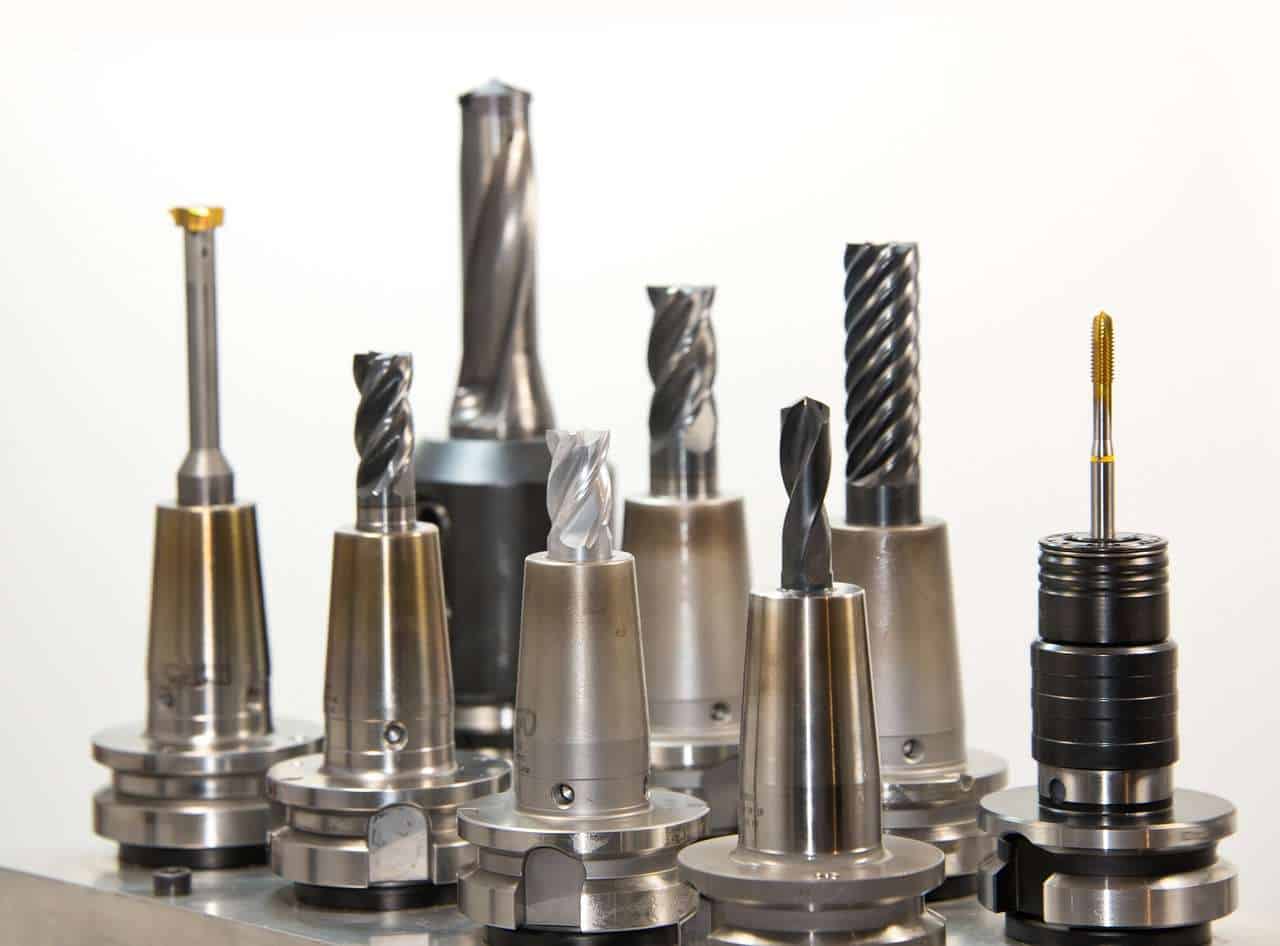
The cutting tool used to fabricate metal is important as it determines the cutting speed and the finishing of the cut. It also affects other CNC fabrication parameters, such as speed, chip load, feeds, and depth of cut.
The cutting tool needs to be strong enough to not break when cutting metal Also, remember that the number of flutes also influences the cutting process. Fewer flutes clear chips better. A tool with fewer flutes is ideal for metals.
Use an Adaptive Toolpath
Due to the high speed and pressure involved in CNC metal cutting, the workpiece and machining tool can get damaged by the high impact. This is why you need to use an adaptive toolpath.
A toolpath is a set of instructions that define the movement of a CNC machine’s cutting tool. An adaptive or dynamic toolpath automatically adjusts the cutting or drilling parameters based on the engagement of the tool and the geometry of the workpiece.
An adaptive toolpath reduces wear and tear of the tool while maintaining accuracy and quality. This boosts the lifespan of the tool and maintains the surface finish.
Apply CNC Cutting Fluid
CNC metal fabrication involves friction which produces excessive heat. To avoid damaging the cutting tool and the metal, use CNC cutting fluid. It acts as a coolant and lubricant to regulate the temperature and improve the quality of cuts.
What Should You Consider When Buying a CNC Metal Cutting Machine?
Here are some factors to consider before purchasing a CNC metal-cutting machine.
Machine Cost
This is perhaps the most important factor since your budget determines your options. It’s important to know that CNC metal-cutting machines are costlier than wood or plastic machines. This is because they need more strength and power to cut through metal. Also, more work area means a higher price point.
For this reason, it’s important that you determine your needs before buying a CNC metal-cutting tool. If you find that you’ll only be using the tool occasionally, it may make more sense to outsource the metal fabrication to a professional CNC service, instead of buying an expensive machine.
Chassis Strength
CNC machine chassis are made of different materials. Chassis made of metal tend to be stronger than those made with wood. Also, entry-level machines with an aluminum chassis may be strong but will undergo flexing when working on hard metals, such as steel.
As such, it’s important to determine your needs before buying this machine. Generally, a CNC machine with a steel chassis will offer a higher rigidity.
Besides, you can also boost the machine’s metal-cutting ability by using heat-treated workpieces, such as annealed steel.
Router Power
Routers have numerous characteristics. Those to consider are power and revolutions per minute (RPM). High RPM spindles have fast cutting times. This makes them suitable for machining soft materials such as wood and plastic.
On the other hand, metal cutting tools need higher torque than RPM. As such, if you’re looking for a machining tool for metal cutting, go for one with more power than RPM.
Using a tool with a higher RPM to fabricate metal can lead to overheating and build-up edges. These issues can considerably reduce tool lifespan.
Machine Work Area
A CNC machine whose work area is small may make sense especially if you don’t have huge business needs. However, it’s important to keep the future in mind. Buying one with a large work area will help you expand seamlessly without having to buy a larger machine.
Conclusion
CNC metal cutting has come a long way since the day of traditional fabrication that involved manually hitting a metal workpiece using sharp tools. This process was tedious, took a lot of time, and didn’t guarantee the high quality of the end product. But CNC machines automated the process.
CNC machining tools are fast, precise, and accurate. They ensure the finished product is of high quality and cut down on business costs since they only need about two technicians to operate. Besides, they also uphold repeatability which is important when producing metal products in bulk.
We’ve looked at factors to consider when purchasing a CNC metal cutting machine. However, it’s important to work with specialists to ensure you get it right. Talk to Hmaking today.