


For manufacturing products, plastic-CNC-machining provides an exciting combination of great accuracy and lightweight properties. Plastic gives better corrosion resistance and design adaptability than other materials. In this blogpost we will cover types of plastic, different processes for plastic CNC-machining and its distinct applications in different industries. But first we will tell you what plastic CNC machining is.
What is Plastic-CNC-Machining?
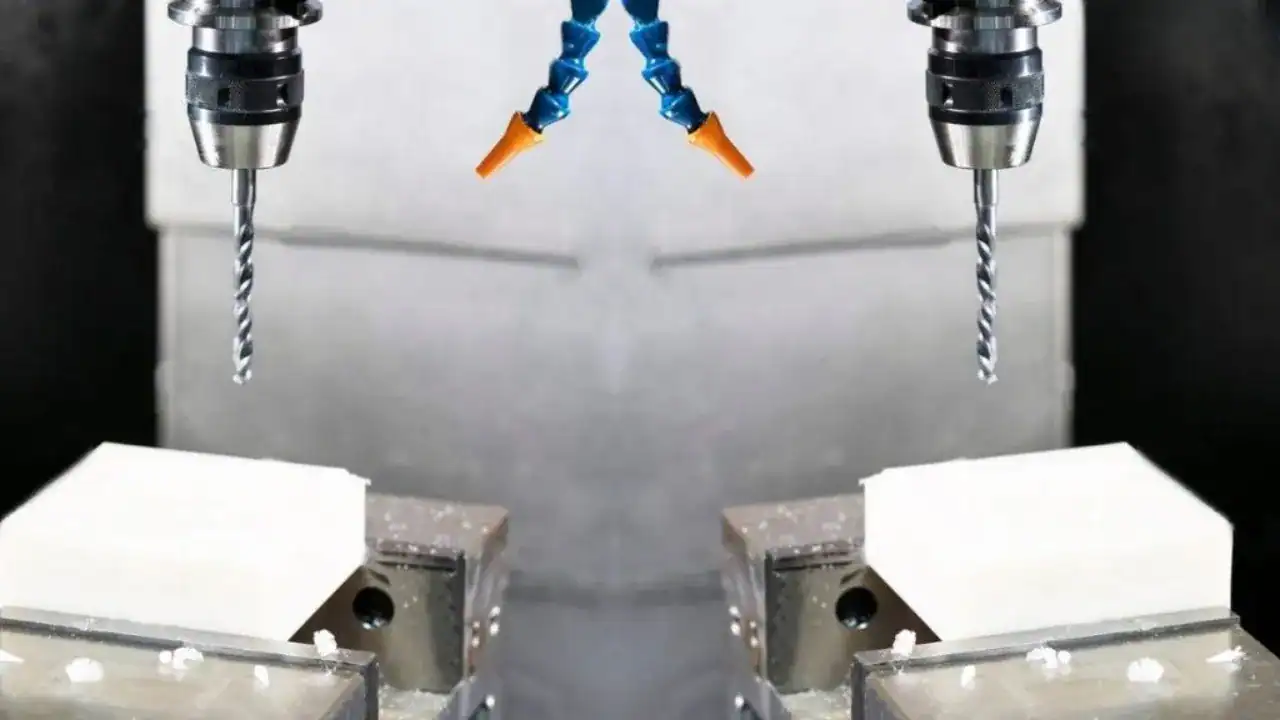
CNC Drilling Process
It is a subtractive manufacturing process that uses computer numerically controlled (CNC) technology to manufacture desired forms from plastic. In this process you feed a solid block of plastic into machine and then a moving cutting tool removes material to produce the final product.
Types of Plastics Best Suited for CNC-Machining
A. Thermoplastics
Thermoplastics are plastics that melt when heated. And you can easily reshape them multiple times without changing their chemical structure. They are used in CNC machining because of their ease of fabrication as well as recyclability. Here are some thermoplastics you can use.
i. Acrylonitrile Butadiene Styrene (ABS)
ABS is an impact resistant and strong plastic material. It is easy to machine and holds its shape well too. Therefore it is appropriate for automotive parts, electronics, and toys.

Acrylic sheets, colorful, DIY, material
ii. Polycarbonate (PC)
Polycarbonate has high impact strength and optical clarity which makes it appropriate for CNC machining. Because of its better heat resistance and dimensional stability, it is used for aircraft components and protective gear.
iii. Nylon (Polyamide)
It is strong, wear resistant and durable material. You can machine nylon into gears, bearings and bushings. But it’s ability to absorb moisture can affect its stability. So while machining you may need to manage humidity and temperature.
iv. Polyethylene (PE)
Polyethylene is chemically resistant and lightweight plastic. So it is normally used in pipes, packaging and chemical resistant containers. Although you may find it easier to machine, it can be difficult to obtain a smooth finish because of its low melting point.
v. Polypropylene (PP)
PP is lightweight, chemically resistant, and very durable. It is used in CNC-machining for making fluid containers, mechanical parts, medical devices, etc. It has outstanding fatigue resistance as well as machinability.
vi. Polyoxymethylene (POM)
POM has impressive mechanical properties with elastic modulus of 2600 MPa and yield tensile strength of 62 MPa. Besides that, it has a low friction coefficient of 0.35 and extraordinary dimensional stability. This in turn makes it perfect for precision automotive or medical components.
vii. Polymethyl Methacrylate (PMMA or Acrylic)
PMMA has excellent optical clarity with 92% light transmission and very good UV resistance. It is used in displays, signs and other optical parts. Moreover you will get smooth finishes when machining acrylic.
viii. Polyether Ether Ketone (PEEK)
It has a tensile strength of 14,000 PSI and heat resistance up to 482°F. You can use it for CNC-machining but you have to handle it very carefully because of its greater melting point and toughness.
B. Thermosetting Plastics

Silicone mats, kitchen, baking, durable, flexible
Plastics that harden permanently when heated or cured and cannot be reshaped or re melted are thermosetting plastics. Compared to thermoplastics, they have better chemical resistance, dimensional stability and heat resistance. Some thermosetting plastics you can use are epoxy resins, polyester resins, melamine formaldehyde and phenolic resins.
CNC-Machining Processes for Plastics
1. Milling

CNC machining, metal cutting, precision machining, automation, industrial manufacturing
CNC-milling is a process of removing material from plastic using a rotating cutter, with multi axis or 3 axis configurations. And it is suitable for production of flat surfaces, pockets and very complicated designs with high accuracy and precision. Aside from that, milling supports a large number of plastic materials such as PC, PEEK and ABS.
2. Turning

CNC lathe, plastic processing, precision machining, high-speed rotation, parts manufacturing
In CNC-turning a stationary cutting tool removes material from a rotating workpiece to obtain precise dimensions. This process is suitable for the manufacturing of asymmetric and cylindrical parts with tolerances as narrow as ±0.01mm. As this process supports high speed operations and assures smooth finishes, it is appropriate for making shafts, bushings and custom fittings.
3. Drilling
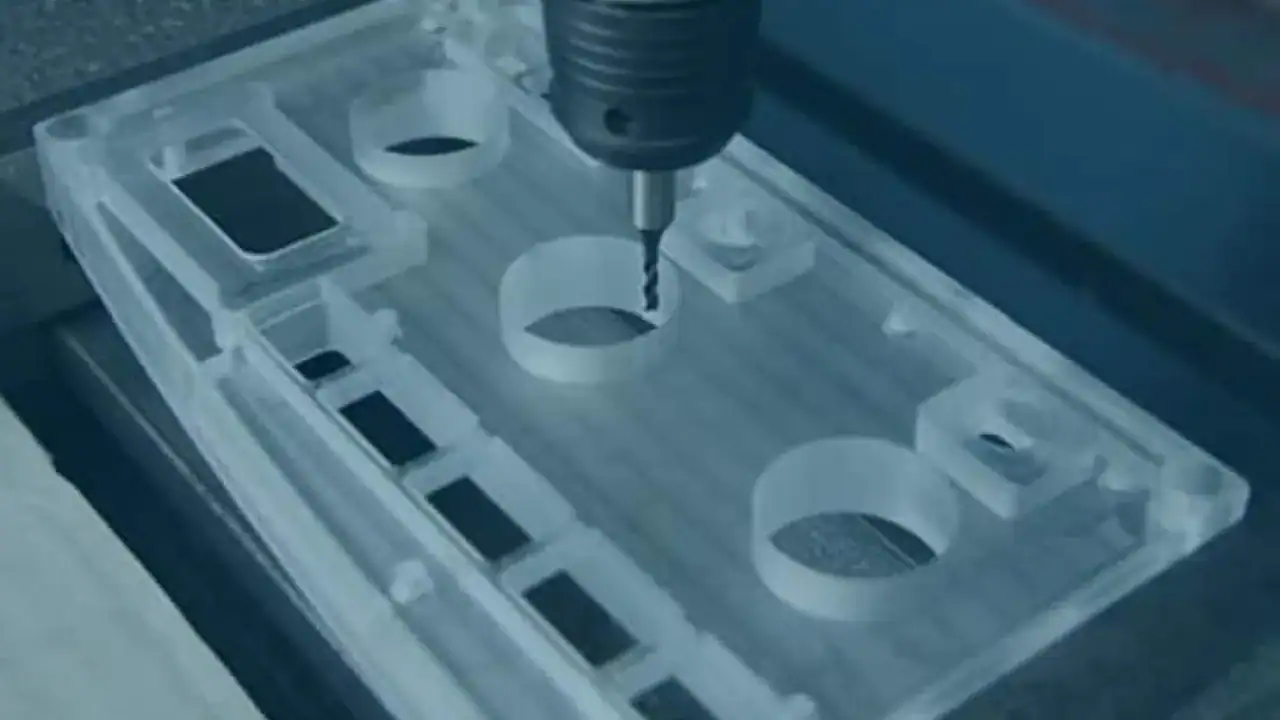
CNC milling, plastic processing, transparent plastic box, precision machining, customized products
In plastic parts, CNC-drilling is used to create holes. It removes material from plastic by using a rotating drill bit. Drilling is used for fastening points, mounting holes, and small features. You have to use proper feed rate and cooling when drilling plastic so the material does not crack or melt.
4. Routing
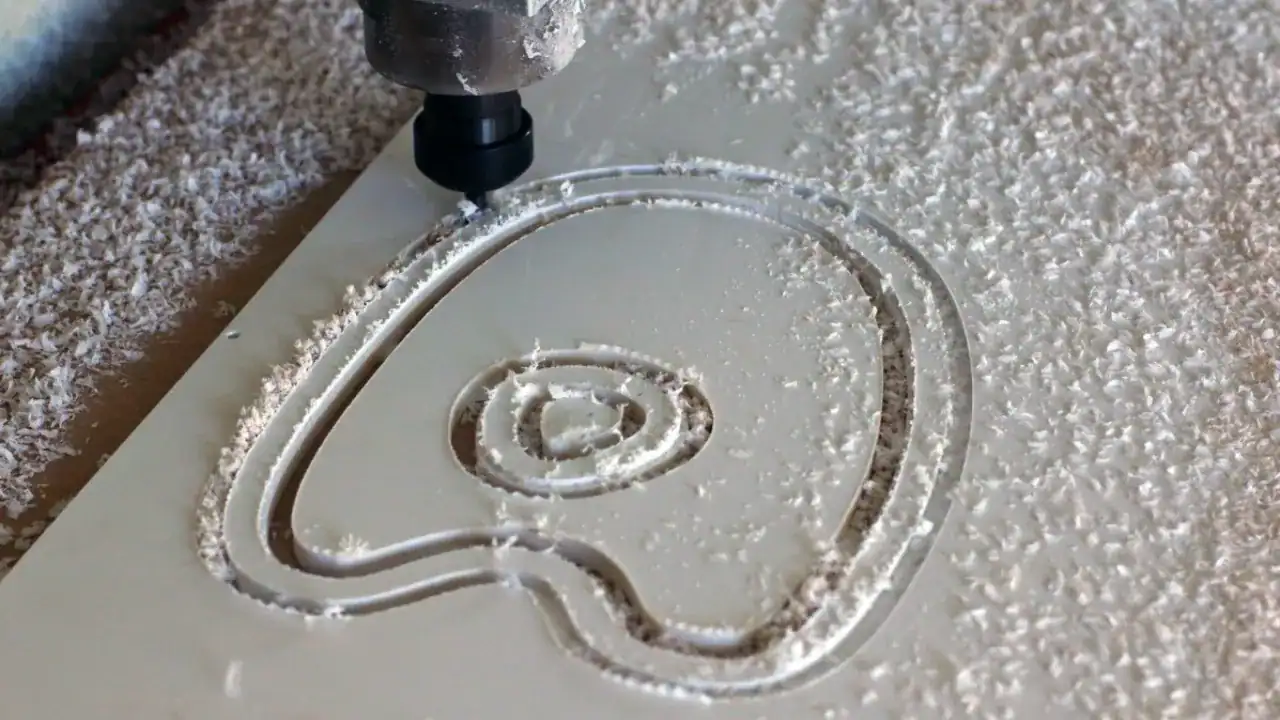
CNC carving, plastic
CNC-routing usually cuts and shapes plastic sheets (polycarbonate & acrylic) into complicated designs and shapes using a rotating bit. This is particularly useful for engraving, sign making and cutting large plastic panels. You will need to control the routing speed and pick the right tool in order to make clean cuts without melting or chipping the plastic.
Benefits of Plastic-CNC-Machining
When working with plastics, CNC-machining lets you reach tight tolerances of ±0.002. It is particularly important for use cases like aerospace components and medical devices where exact dimensions and fit are required.
Because of accurate cutting and shaping, plastic-CNC-machining reduces material waste by using the minimum amount of material. This proficiency in turn promotes sustainable manufacturing and minimizes material costs.
When designing plastic parts, CNC-machining provides outstanding adaptability. This method permits you to create a broad range of intricate features and shapes that are almost impossible to make with other techniques.
Plastic-CNC-machining decreases setup time and eliminates the expense of mold tooling. The process is economical for prototypes as well as small to medium production runs because of minimum material waste and labor needs.

Gears
Applications of Plastic-CNC-Machining
Automotive
Dashboard trim, interior panels, headlight lenses, grilles, bumper covers and other custom parts are all made by using plastic-CNC-machining.
Aerospace and Defense
Plastic machining is used to manufacture parts such as wingtip fairings, avionics mounting brackets, radar covers and components of landing gear.
Electronics
Many electronic parts such as switch panels, enclosures, insulating components and connectors are produced by plastic-CNC-machining. They are used for electrical insulation as well as to protect sensitive electronic devices.
Medical Devices
Plastic-CNC-machining performs an important part in the creation of elements such as implants, prosthetic limbs, needle guards and surgical tools.
Prototyping and Rapid Manufacturing
This machining permits you to quickly make prototype enclosures and functional plastic prototypes to test and validate designs. This process not only enables you to speed up development cycles but also make changes before mass production.
Artistic and Decorative Items
Plastic machining is used to manufacture a broad variety of products like architectural accents, sculptures, jewelry and award plaques.
Custom-made Products
Custom made products, like bespoke phone cases, custom prototypes, gaskets, seals and personalized accessories can be made using plastic-CNC-machining.
Conclusion
Plastic-CNC-machining provides outstanding accuracy, affordability and adaptability in aerospace, automotive and medical device industries. It is a vital material for modern manufacturing because it can create complex designs with different types of plastics,
If you need any kind of plastic-CNC-machining services, then hmaking is your best option. You can contact us anytime.