


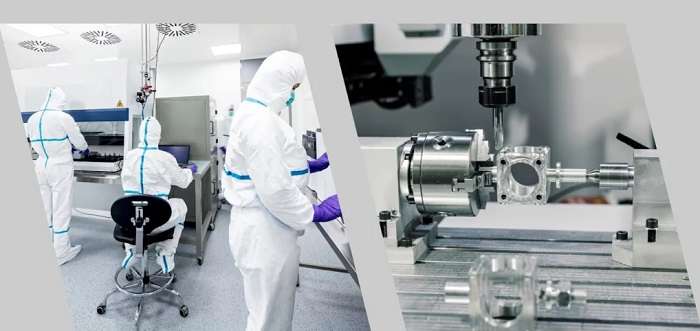
Computer Numerical Control (CNC) machining has significantly contributed to the technological advancements in the medical and healthcare sectors. This has been through the computerized production of high-precision medical components.
This post dissects what Medical CNC machining entails, the processes involved, materials used, key benefits, and application areas.
What Is Medical CNC Machining?

Medical CNC machining is the production of medical parts and components using CNC machines. It is a computerized production process for CNC medical parts such as surgical tools and human implant devices.
Medical CNC Machining Materials
There is a wide range of medical-safe materials you can consider for CNC machining of medical parts based on the desired device properties and application areas. They include:
Metal Materials
Most CNC medical parts are made of metals which are cherished for their superior strength and excellent durability. Some metals such as stainless steel and titanium boast excellent biocompatibility.
Some of the common metal elements and alloys to consider different medical parts include aluminum, stainless steel, nitinol, titanium, and cobalt-chrome
Plastic Materials.
Plastic materials are cost-effective, flexible, versatile, and resistant to chemicals. They are ideal for CNC machining of implants and surgical instruments.
The common plastic materials you can choose for your CNC medical parts are Acrylic, Polyether Ether Ketone(PEEK), and Polycarbonate(PC).
Ceramic Materials
Ceramic is another material suitable for producing CNC medical parts such as orthopedic implants. They are known for their hardness and biocompatibility properties.
The most common ceramic materials for medical CNC machining are Alumina, Silicon Nitride, and zirconia.
Medical CNC Machining Processes & Techniques
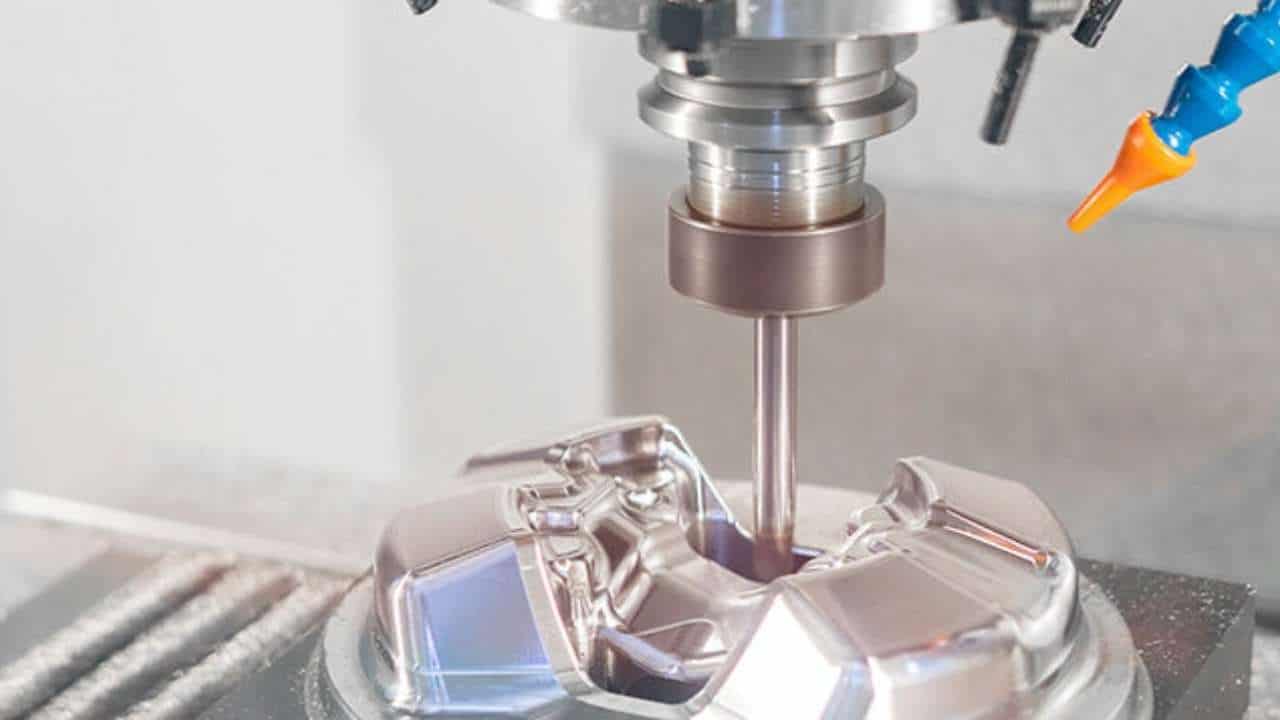
Different medical devices require different CNC machining techniques or processes to produce.
Here are some of the common machining methods or techniques you need to embrace in your medical parts production:
Medical CNC Laser Cutting & Engraving
Before you work on your medical-grade metal or plastic materials to produce various parts, you must cut them into desirable sizes and shapes.
You achieve this using a CNC laser cutting machine. The machine also helps in engraving your finished CNC parts for easy identification.
Medical Industry CNC Milling Process
In this production process, the workpiece of the medical part you intend to machine is secured in a fixed position, and its material is removed by a rotating cutting tool.
This is achieved using a suitable CNC router machine.
The medical parts you can produce using this machining technique include surgical tools and orthopedic implants.
CNC milling is also necessary for prototyping medical industry parts.
CNC Turning Machining Process
Unlike the CNC machine where the cutting tool rotates, CNC turning is the reverse. Your workpiece rotates, and a fixed cutting tool is fed to initiate machining.
Therefore, this process requires the use of a CNC lathe machine.
Because the machining is done on a rotating workpiece, this technique is ideal for producing high-precision cylindrical medical components used in implants, medical hardware devices, or surgical instruments.
CNC Grinding In Medical Machining
A CNC grinding machine is necessary to produce some CNC medical parts, such as diagnostic devices, orthopedic implants, and surgical instruments.
The grinding process helps improve the surface finish or shape of your medical parts.
Here is a guide on how to buy a CNC grinding machine.
Multi-Axis CNC Machining Techniques
Another machining strategy you can adopt for medical parts production is multi-axis machining. A 5-axis CNC machine is a perfect choice for this technique.
Because the machining tools can be programmed to move in multiple directions, they allow for the precise and easy production of complex medical implants and devices.
Swiss Medical CNC Machining
Some medical components such as surgical or diagnostic electrical instruments, may be too small or intricate to machine using a CNC router or a lathe machine.
In such cases, Swiss CNC machining is your best parts production technique. The process allows you to produce small but intricate medical parts in large quantities.
Medical CNC Wire Electrical Discharge Machining (EDM)
Cutting or machining some complex medical instruments or components as cardiovascular devices can be a challenge because they can easily get damaged by the stress from the tools.
Wire EDM is a high-precision technique you can use to cut conductive materials without stress impact on your workpiece.
As the name suggests, the cutting is achieved by an electrical discharge which allows for the precise cutting of intricate medical parts with no stress risks..
Medical CNC Micro-Machining
Some medical components such as endoscopic tools and laboratory devices are so tiny that machining them requires that you rely on a special examination microscope.
Therefore, to produce such miniature parts, you must rely on special micro-machines.
The micro-machining technique is also ideal when your project involves small-scale prototyping of tiny medical devices.
Here is a guide to CNC micro-machining
Medical Parts Photochemical Machining (PCM)
The machining of thin medical devices such as medical filters, wire meshes, and some complex implant devices requires effective and high-precision machining.
For such parts, you should consider a Photochemical machining(PCM) process.
The technique relies on the use of etching agents for precise machining of parts.
Ultrasonic Machining of CNC Medical Parts
When shaping medical parts from hard but brittle materials such as glass or ceramics, ultrasonic machining can be your best technique.
This technique requires the use of abrasive materials that vibrate and high-frequency for high-precision component shaping.
Benefits of Medical CNC Machining.
Below are some of the compelling reasons for choosing CNC machining for your medical parts production:
- Superior Parts Production With No Human Error: CNC machining enables you to produce accurate and precise medical parts that comply with the provided specifications and standards. Because the production is computerized, human errors are minimal.
- Saves You Production Time The production technology allows for fast production of parts because it relies on computerized machining tools. This makes it possible to quickly produce new and innovative parts if and when desired by the medical sector.
- Flexibility in material choice. You have the flexibility to choose different metals for your medical devices because the technology works with metal, plastic, and ceramic materials.
- Repeatability of Parts: Medical CNC machining allows you to produce similar parts consistently.
- Integration With CAD/CAM Software: CNC machines are compatible with CAD/CAM software solutions. Therefore, the development of new medical parts from design to production is flexible and seamless. With a CNC machine, you can instantly use the already-prepared digital design to produce components. This makes it ideal for Rapid Prototyping projects.
- Medical Parts Customization & Personalization: CNC machining allows for the customization of medical parts to suit different individuals.
- Cost-Effective Technology: While the initial cost of purchasing CNC machines is high, it is a cost-effective solution in the long run. A single CNC machine can handle different machining processes. So, you do not need to invest in different manual machines to produce your medical parts.
Applications of Medical CNC Machining

With CNC machining, you can produce medical parts and components for different applications, as explained below.
Surgical Tools and Instruments.
Medical CNC machining produces surgical tools such as forceps, surgical scissors, scalpels, implant holders, and clamps.
The technology is also used to produce ergonomic and high-precision instruments for invasive surgery procedures such as hysterectomy, endoscopy, coronary artery bypass, and laparoscopy.
Diagnostic Components
Parts of medical diagnostic systems such as MRI and other laboratory testing devices rely on CNC-machined parts.
Machining of Customized Prosthetics & Orthotics
CNC machining allows the use of patient data to design and produce customized prosthetic limbs or orthotic parts.
Therefore, the technology enables patients who have lost limbs or arms to get suitable replacements.
Human Implants
Advancements in CNC machining for the medical sector have also made it possible to produce customized high-precision implants for patients who need them.
Examples of CNC-machined parts are dental, joint, and knee implants.
Enclosures of Medical Equipment
Some medical devices or instruments require careful handling, especially when moving or transporting them from one location to the next. Such devices require special CNC-machined enclosures to keep them in safe and stable condition.
Assistive Medical Devices

Patients who have movement problems due to sickness or following an accident rely on assistive medical devices to enable them to cope with life.
Assistive CNC-machined devices can be braces, wheelchairs, or mobility aids such as the white cane to assist those who are blind.
Production of Maniature or Micro Medical Devices
In the medical sector, CNC machining helps produce micro devices such as biosensors for diagnostic systems. It is also used to manufacture other micro-devices for drug delivery systems.
Examples of CNC-machined micro medical devices that you can produce include catheters, stents, and bone screws.
Conclusion
The future of CNC machining is promising, as advancements in the new technology to produce complex medical parts continue to grow.
Production of high-precision CNC medical parts demands adequate investment in innovative machining technology and skilled personnel.
HM has the experience and technical capacity to respond to your project needs.
Contact us today to discuss your CNC medical parts requirements.