


he Chip Problem in Blind Holes
Threads look simple on a drawing. In production, they are one of the most common sources of scrap, rework, and customer complaints—especially in aluminum CNC parts where it is easy to strip, cross-thread, or end up with a thread that “passes once and fails later.”
Two parts can have the same thread callout and still behave very differently on the shop floor. The difference is often not the thread standard. It is the process: how the hole is prepared, how the tap is guided, and whether you use a cut tap (chip-making) or a (chipless forming).
This guide explains the tradeoffs in plain terms and gives you a practical decision framework. If you buy or make aluminum CNC parts or aluminum die castings with machined threads, you will also find a DFM/RFQ checklist you can use immediately.
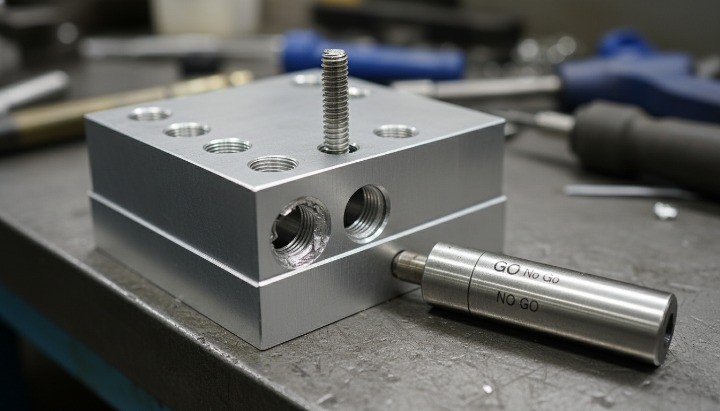
Cut Tap vs Form Tap Quick Decision Guide
If you need a simple rule: use a form (roll) tap in ductile materials like aluminum when you can control hole size, alignment, and lubrication—especially for blind holes. Use a cut tap when the material is less ductile, lubrication is limited, torque is a constraint, or hole size varies and you need a more forgiving process.
When roll tapping is usually the best fit?
Roll tapping tends to shine when your priority is repeatable thread quality and fewer “surprise” defects in soft metals.
-
Ductile materials (common aluminum alloys, many soft metals) where material can be displaced cleanly.
-
Blind holes where chip packing is a real risk with cutting taps.
-
High-volume parts where you want stable results across tool life (and want fewer chip-related variables).
-
Cosmetic or cleanliness-sensitive parts where chips are hard to remove or unacceptable.
When cut tapping is often the safer choice?
Cut taps are not “old tech.” They are often the right answer when your process window is narrow.
-
Less ductile or more brittle materials where forming would crack or produce poor threads.
-
Limited lubrication/coolant access (form taps are very lubrication-sensitive).
-
Torque-limited setups (small machines, weak fixturing, or fragile features).
-
Variable pre-hole size that you cannot control tightly (casting variation, inconsistent drilling, burrs you cannot reliably remove).
When thread milling beats both?
If you are fighting breakage, thin walls, or interrupted features, thread milling can be the easiest way to stabilize results.
-
Thin walls where tap torque distorts the part or breaks features.
-
Interrupted threads, keyways, cross-holes, or other features that disrupt tapping.
-
Hard-to-control holes or expensive parts where the cost of a tap break is unacceptable.
-
Situations where you want one tool to cover multiple thread sizes (common with CNC thread mills).

Cut Tap vs Form Tap What Is the Real Difference
The names are descriptive:
-
A cut tap makes threads by cutting away material and producing chips.
-
A form tap (also called a roll tap or thread forming tap) makes threads by displacing material into the thread shape. It produces no chips from the tapping action itself.
Both can produce threads that pass gaging. The difference is what tends to go wrong, and what you must control to keep quality stable.
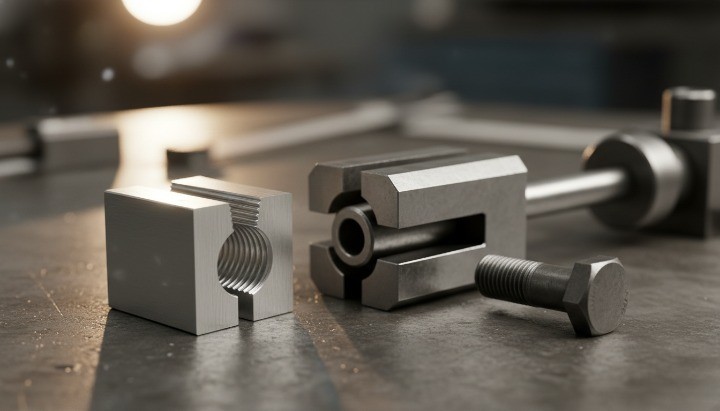
How Cut Taps Create Threads and Why Chips Matter?
Cut taps have flutes that create cutting edges. As the tap advances, it slices the thread profile into the wall of the hole. That removed material becomes chips that must go somewhere.
In through holes, chips can exit the far side. In blind holes, chips often have to move up the flutes, compress, or break into smaller pieces. This is where many failures start:
-
Chip packing that increases torque and breaks taps
-
Chips trapped at the bottom that damage the last threads
-
Chips that stay in the hole and cause assembly issues later
Cut tapping can still be excellent when:
-
The hole is a through hole (or chip evacuation is well-controlled)
-
You need lower torque than a form tap would require
-
Material or coating behavior makes forming unreliable
How Form Taps Make Chipless Threads?
Form taps have lobes rather than cutting edges. As the tool rotates and advances, those lobes push material outward and upward into the thread shape.
Key outcomes:
-
No chips from the tapping operation, which is a major advantage in blind holes.
-
The thread profile is created by plastic deformation, so the local material structure is not “cut through” the same way.
-
The process is sensitive to hole size, alignment, and lubrication, because the tap is displacing material and torque rises quickly if the pre-hole is too small.
What Stronger Threads Really Mean in Aluminum?
When people say roll tapping makes “stronger threads,” they usually mean one of these practical improvements in ductile materials:
-
Better resistance to stripping in soft metals, because the thread surface is formed rather than cut and the material has been displaced into shape.
-
More consistent thread engagement when the process is controlled, which reduces weak threads that pass a quick check but fail under load.
It does not mean a roll-formed thread automatically beats every cut thread in every material. If your hole size is inconsistent, your lubrication is poor, or the material does not form well, a form tap can produce worse results (or break).
Why Roll Tapping Works So Well for Aluminum Threads?
Aluminum is a common “problem child” for internal threads:
-
It is softer than steel, so stripping is easy if thread engagement is weak.
-
It can be gummy, which increases galling risk on tooling and fasteners.
-
It is often used with surface finishes (anodize, coatings) that can tighten thread fit.
Form tapping matches aluminum well because aluminum generally forms cleanly when the hole is prepared correctly and lubrication is appropriate.
Why Aluminum Threads Strip The Real Root Causes?
In real projects, stripped threads rarely come from just one mistake. It is usually a stack of small issues:
-
Hole is slightly oversized, reducing engagement
-
Thread depth is shallow (effective engagement is less than assumed)
-
The thread is damaged by chips, burrs, or roughness
-
Assembly cross-threads because the entry is sharp or misaligned
-
Finishing changes the fit and forces the fastener
When you switch to roll tapping (with correct hole sizing), you remove one major variable—chip behavior—and often stabilize the thread surface and engagement.
Blind holes: the “no chips” advantage is real
Blind holes are where roll tapping often pays for itself.
With a cutting tap, you have to manage:
-
where chips go,
-
how they break,
-
whether they pack,
-
and whether they stay in the hole after tapping.
With a form tap, the chips are simply not created by the tapping action. You still must control the drilled hole quality and entry burrs, but you are no longer fighting chip packing at the bottom of a blind hole.

What you must control for roll tapping to work?
Roll tapping is not forgiving. The process window is often defined by four controls:
1) Pre-hole size (tap drill size for forming) Form taps require a different pre-hole size than cut taps. If the hole is too small, torque spikes and taps break. If the hole is too large, engagement is weak.
Practical guidance: use the tap manufacturer’s drill chart for thread forming, and treat hole size as a critical dimension—especially if the part is a casting or the drill wears quickly in production.
2) Entry chamfer / lead-in A clean chamfer helps the tap start straight and reduces the chance of tearing the first threads. It also helps assembly start without cross-threading.
3) Lubrication strategy Form taps are highly sensitive to lubrication. You are pushing material into shape, and friction matters. If lubrication is poor, you will see higher torque, galling, and shortened tool life.
4)Tolerances: We verify pre-hole sizes against strict CNC machining tolerance standards before tapping.

Roll Tapping Tradeoffs What You Gain and What You Must Control
Roll tapping is not “free performance.” You gain stability in one set of risks, and you accept a different set.
Tradeoff 1: higher torque requirements
Forming requires higher torque than cutting in many situations, because you are deforming material rather than slicing it. That affects:
-
machine capability (especially small machines or light-duty spindles),
-
part rigidity and fixturing,
-
and the risk of distorting thin features.
If you have thin walls or delicate geometry, thread milling or a different design choice (insert, larger boss, different thread size) can be the better fix.
Tradeoff 2: Hole Size Sensitivity Why Castings Make It Harder
In aluminum CNC parts, hole size control is usually straightforward if drilling is stable.
In aluminum die castings, hole size variation can be higher due to:
-
cast surface variation at the hole opening,
-
porosity or inclusions,
-
tool deflection in interrupted or uneven entry surfaces,
-
and burrs that are not consistent.
This does not mean you cannot roll tap die cast aluminum. It means you should treat the pre-hole as a controlled machining feature and plan for:
-
consistent drilling/reaming strategy if needed,
-
deburring and entry conditioning,
-
and in-process checking when thread performance is critical.
Tradeoff 3: finishing and assembly can change thread fit
If the part will be anodized, plated, or coated, the thread fit can change. Common failure pattern:
1) Threads pass Go/No-Go before finishing. 2) Finish is applied. 3) Assembly requires higher force or starts cross-threading.
The fix is not to “force the screw.” The fix is to specify the correct approach early:
-
define whether threads are tapped before or after finishing,
-
define any post-finish gaging requirement,
-
and choose a thread class/fit appropriate for the finish.
DFM cheat sheet: how to spec threads so they don’t become a complaint
Use this table as a checklist during design reviews and RFQs. It is intentionally practical and avoids brand-specific tooling choices.
| Topic | Best practice for form (roll) taps | Best practice for cut taps | Why it matters |
|---|---|---|---|
| Material suitability | Choose ductile materials (common aluminum alloys) and avoid brittle materials unless proven | Works across more materials, depending on tap geometry | Form taps depend on plastic deformation; cutting depends on chip formation |
| Pre-hole size | Use the tap maker’s thread forming drill chart; control hole size tightly | Use the standard tap drill chart for cutting taps | Hole size drives torque, engagement, and gage results |
| Hole type | Excellent for blind holes due to no chip packing | Through holes are easier; blind holes need chip control | Chip behavior is a major variable in blind holes |
| Entry chamfer | Always add a clean chamfer/lead-in | Also recommended | Reduces torn first threads and cross-threading risk |
| Bottom clearance (blind holes) | Add extra depth for tap lead and material flow; confirm per tool | Add extra depth for chip space and tap lead | Bottoming out ruins threads and breaks taps |
| Lubrication | Treat lubrication as critical; ensure delivery into the hole | Important, but often slightly more tolerant | Friction drives torque spikes, galling, and tool life issues |
| Alignment/holding | Prefer rigid tapping + stable holder; minimize runout | Same goal; sometimes more forgiving | Misalignment causes breakage and bad thread geometry |
| Burr control | Remove burrs and smearing before tapping | Remove burrs; manage chip/burr at entry | Burrs damage threads and create assembly failures |
| Surface finishing | Plan thread fit around anodize/plating/coatings | Same | Finishing can tighten fit and create false failures |
| Inspection plan | Define Go/No-Go and when it applies (pre/post finish) | Same | “Pass once, fail later” often comes from unclear inspection timing |
Internal Thread RFQ Checklist What Your Supplier Needs
If you want consistent threads, include these in your RFQ package:
-
Thread spec (standard, size, pitch, class/fit if applicable)
-
Hole type (blind/through) and required full-thread depth
-
Any mating fastener info (if special) and assembly torque expectations (if critical)
-
Material and condition (wrought aluminum vs die cast aluminum; any heat treat)
-
Surface finish requirements (especially anodize/plating) and whether gaging is required after finish
-
Critical-to-quality callouts: what actually matters (pull-out, torque, sealing, cosmetic)
-
Quantity / production plan (prototype vs serial production) and expected engineering changes
Troubleshooting: common thread defects and how to fix them
This section is written for teams trying to eliminate recurring issues—especially “random” failures that come and go.
Stripped Threads in Aluminum Causes and Fixes
Common causes:
-
Hole slightly oversized, or inconsistent across cavities/lots
-
Too little effective thread engagement (depth or design)
-
Finishing changed fit and the fastener damaged threads during assembly
-
Entry burr or sharp edge causes cross-threading
Fixes:
-
For ductile aluminum, consider switching to form tapping with correct pre-hole sizing
-
Add/clean entry chamfer and tighten deburr controls
-
Confirm inspection timing (pre vs post finish) and gage selection
-
If stripping is still a risk, evaluate design changes (larger boss, longer engagement, insert)
Tap Breaks in Blind Holes Causes and Fixes
Common causes:
-
Chip packing (cut taps) in blind holes
-
Pre-hole too small (form taps) causing torque spike
-
Misalignment or runout in the tapping setup
-
Poor lubrication delivery into the hole
Fixes:
-
If chips are the issue, roll tapping can remove the chip-packing failure mode
-
Control pre-hole size and monitor drill wear (don’t “set and forget”)
-
Improve holder strategy (rigid tapping, appropriate holder, reduce runout)
-
Improve lubrication delivery (especially for form taps)
Go No Go Gage Failures Why Threads End Up Too Tight or Too Loose
Common causes
- Wrong tap drill size for the tap type, especially mixing form tapping and cut tapping drill charts
- Tool wear and gradual process drift over long runs
- Anodize plating or coating changes thread fit after machining
- Material springback differences by alloy and process route
Fixes
- Confirm the drill chart matches the tap type and the exact thread spec
- Add in process gaging tied to tool life and hole size control, not only end-of-lot checks
- If finishing is involved, define post finish gaging requirements and adjust the process plan and thread fit accordingly
Rough Threads Galling or Tearing Causes and Fixes
Common causes
- Inadequate lubrication, especially with form tapping where friction drives torque and galling
- Poor hole surface condition from drilling, including smearing and built up edge
- Wrong tap geometry or coating for the material and finish condition
Fixes
- Upgrade lubricant choice and make sure delivery reaches the full hole depth
- Improve drilling strategy with sharp tools, stable parameters, and reliable chip evacuation
- Use thread milling for difficult geometries or when thread surface quality is a CTQ
Typical Part Scenarios How We Choose in Production
6061 CNC Parts With Multiple Blind Threaded Holes
If the part is 6061 and has many blind holes, the biggest risks are usually:
- Tap breaks caused by chip packing with cut tapping
- Inconsistent thread quality across dozens of holes as tools wear
- Chips left in the hole that later cause assembly damage or false gage results
In this situation, roll tapping is often the simplest way to stabilize production because it removes chip packing from the equation. It works best when you control the two CTQs that matter most for forming: pre hole size and lubrication delivery.

Aluminum Die Cast Parts With Machined Threads
In die cast aluminum, treat every threaded hole as a controlled machining feature. The three controls that decide success are:
- Condition the entry by removing cast skin and burrs
- Control hole size with a consistent drilling or reaming strategy
- Verify alignment and rigidity in the fixture so the tap starts straight
Roll tapping can still be a strong option because it is chip free and avoids chip packing, but die casting variation means hole preparation is usually the deciding factor for stable thread quality.
Thin Walls or Interrupted Features Near the Thread
If the wall is thin or the thread is interrupted by a cross hole slot or keyway, tapping torque can distort the part or break tools. In these cases:
- Choose thread milling first for the most controllable process
- Redesign the boss or add material to support the thread
- Use a thread insert when the thread must carry high load in soft metal
FAQ
Are roll taps the same as form taps?
Yes. In most shop usage, roll taps, form taps, and thread forming taps refer to the same chipless forming method.
Do form taps work for blind holes?
They often work very well in blind holes because there are no chips from the tapping action. You still need bottom clearance and good lubrication.
Do roll taps require a different tap drill size?
Yes. A common mistake is using a “cut tap” drill size with a form tap. Always use the tap manufacturer’s thread forming drill chart.
Can you roll tap die cast aluminum?
Often yes, but it depends on hole preparation and casting quality. If hole size varies a lot, burrs are inconsistent, or lubrication cannot reach the hole reliably, cut tapping or thread milling may be safer.
conclusion
If your program includes aluminum CNC machining or aluminum die castings with machined threads, lock the thread strategy before you cut metal: we’ll recommend cut tap vs. form (roll) tap vs. thread milling based on your hole type (especially blind holes), material ductility, lubrication, and torque limits, then specify the CTQs that prevent stripped threads and tap breaks—correct form-tap drill size, clean lead-in chamfer, stable alignment/runout, and clear inspection timing pre/post anodize or plating; send your 2D/3D files, thread callouts, gaging requirement, and finishing notes via https://hmaking.com/contact-for-a-quote/.