


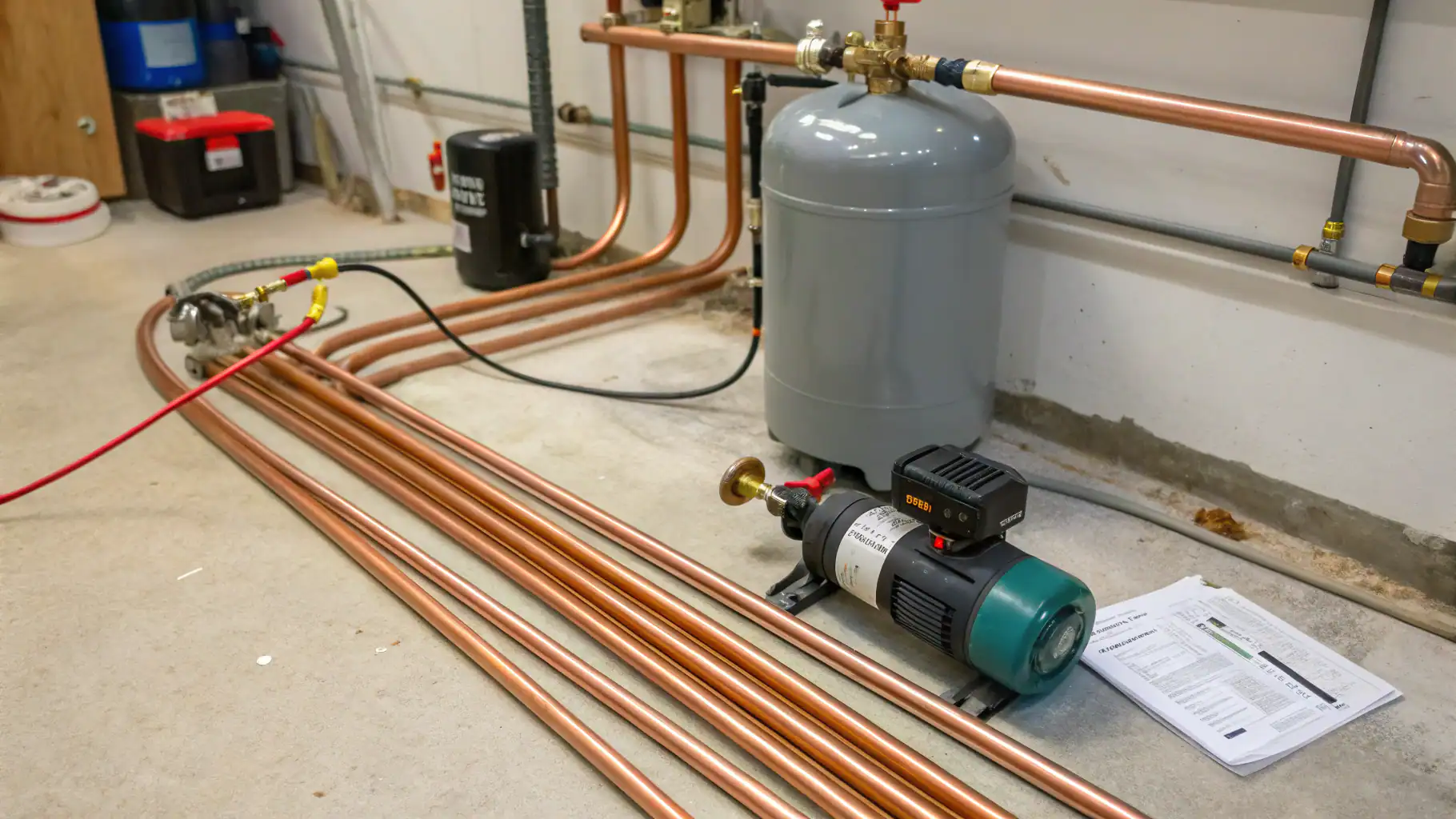
Are you tired of worrying about the right materials for your compressed air system? Choosing the wrong tubing can lead to costly failures and headaches.
Yes, copper tubing can be used from the compressor head to the tank, but it’s essential to follow specific guidelines for optimal performance and safety.
In this blog post, we will explore why copper is a popular choice for compressed air systems, how to properly install it, and what precautions you should take to avoid issues like vibrations that could compromise your setup.
Copper tubing can be used from the compressor head to the tank.True
Copper is commonly used for its durability and heat resistance.
Copper tubing installation doesn't require any precautions against vibrations.False
Vibrations can cause fatigue; proper support is needed.
What Are the Key Benefits of Using Copper in Compressed Air Systems?
Copper is essential for efficient compressed air systems. It enhances reliability and reduces maintenance costs. Discover how copper types K, L, and M1 can transform your system today.
Copper types K, L, and M offer unique benefits for compressed air systems. They provide excellent corrosion resistance, high thermal conductivity, and durability. These properties ensure that the system operates efficiently over time.
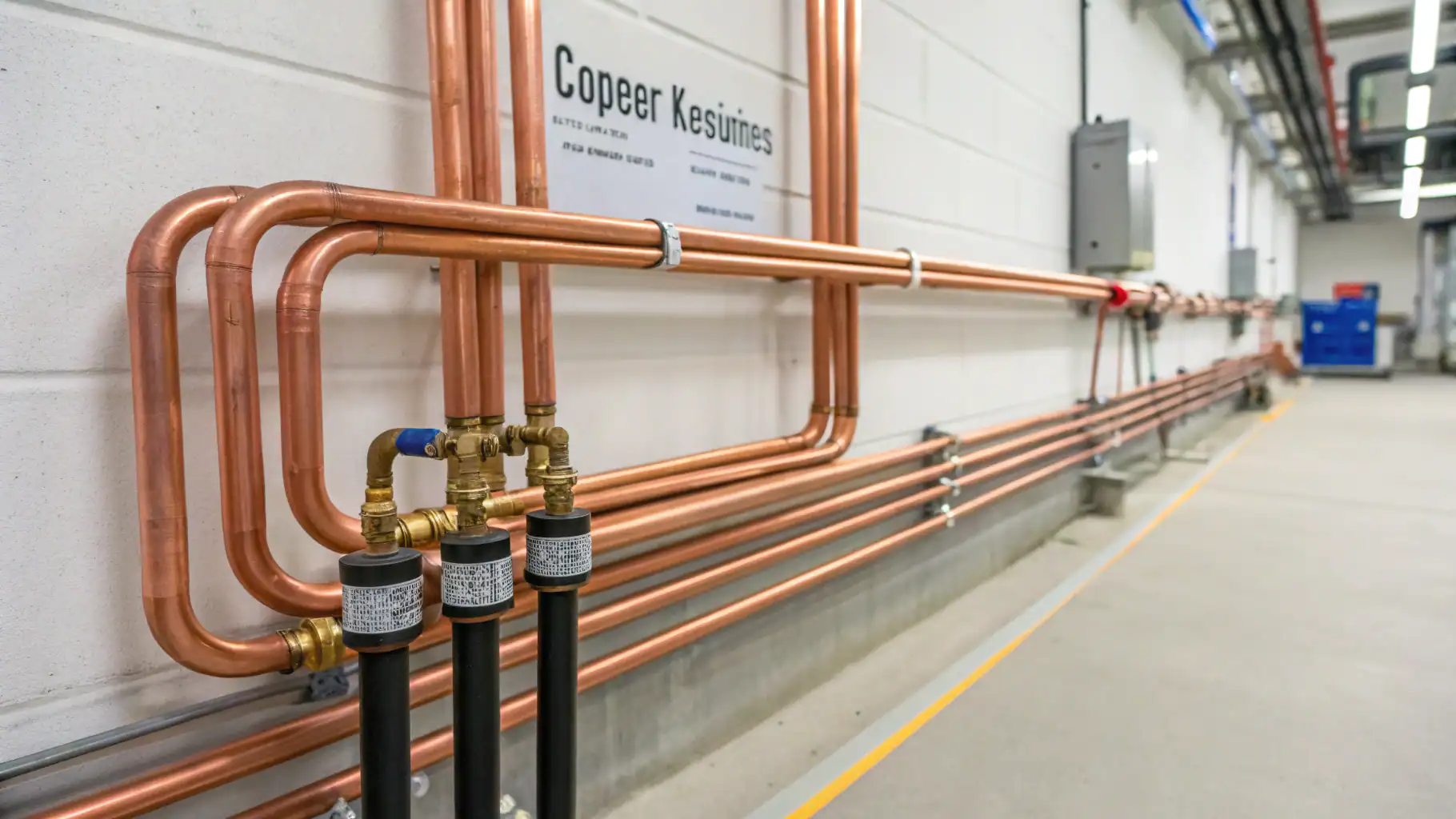
Using copper in compressed air systems helps manage vibrations effectively. Air compressors generate vibrations that can stress pipes. If pipes are directly connected, they may fail due to these stresses. By using copper tubing with brazed joints, you create a strong connection that withstands these forces. Additionally, incorporating a short piece of air hose—often called a whip or lead-in hose—after the ball valve helps insulate the piping from vibrations. This setup not only protects the integrity of the system but also prolongs its lifespan. Overall, copper’s reliability makes it an ideal choice for enhancing efficiency in compressed air applications.
Copper provides excellent corrosion resistance in compressed air systems.True
Copper naturally resists corrosion, enhancing system longevity.
Copper tubing cannot withstand vibrations in compressed air systems.False
Copper with brazed joints effectively manages vibrations.
How Can Vibration Impact Your Piping System?
Vibrations from air compressors can silently damage your piping system. Ignoring this issue may lead to costly failures and downtime.
Vibrations caused by air compressors can stress pipes, leading to leaks or breaks. To protect your piping integrity, use copper types K, L, or M2 for compressed air systems. Additionally, consider brazed joints for copper tubing and install a short piece of hose after the ball valve to absorb vibrations. This simple step can significantly extend the life of your piping system.
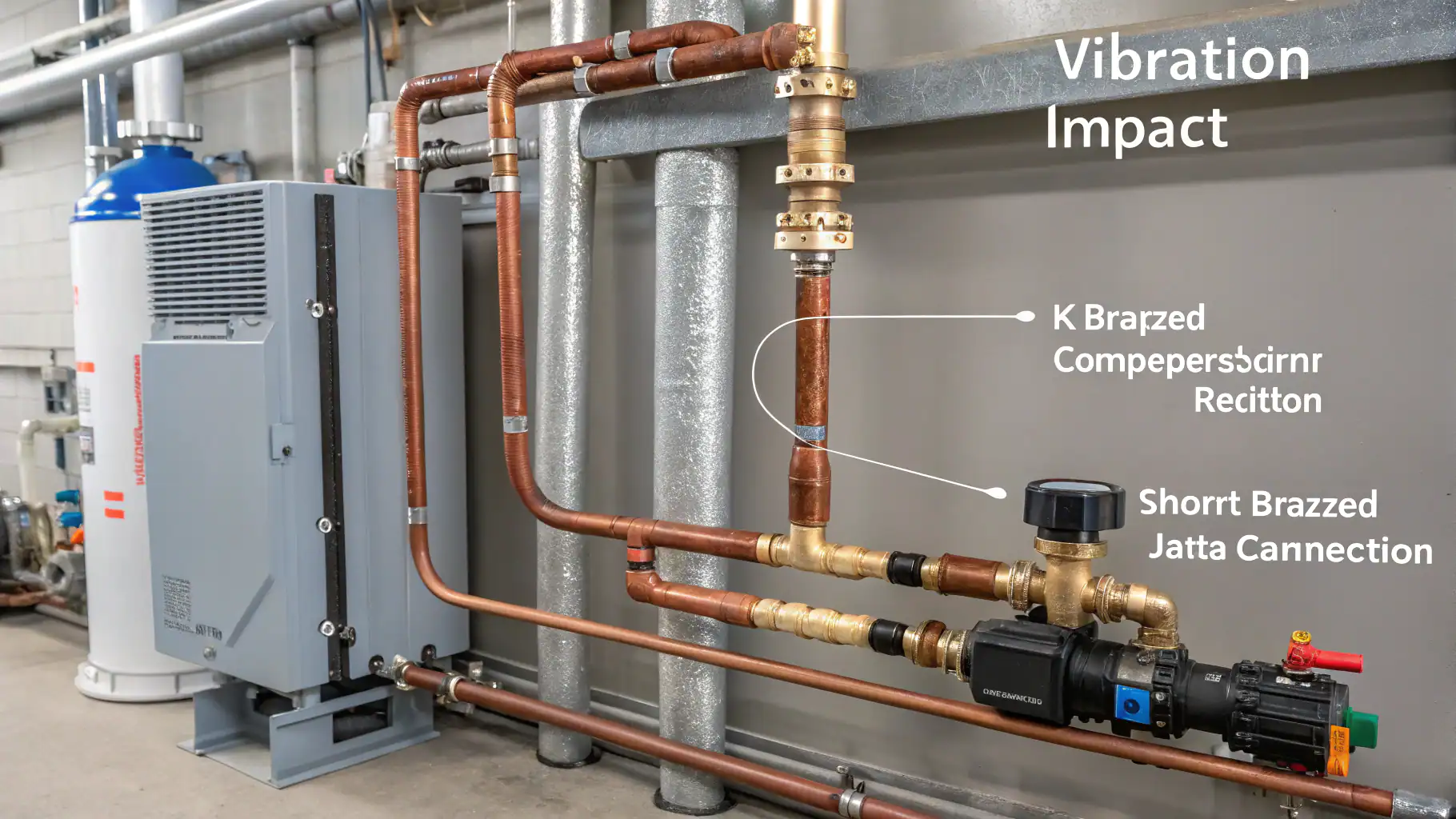
Air compressors generate vibrations that directly affect connected pipes. These vibrations create stress points that can weaken the material over time. Copper is often chosen for its durability and resistance to corrosion, making it ideal for compressed air systems. The recommended types—K, L, and M—offer varying wall thicknesses suited for different pressure levels.
Using brazed joints enhances the strength of connections in copper tubing. Moreover, adding a whip or lead-in hose acts as a buffer against vibrations. This soft connection helps isolate the piping from direct impacts caused by compressor operations. By implementing these strategies, you can mitigate potential failures and ensure a more reliable piping system overall.
Vibrations caused by air compressors can stress pipes, leading to leaks or breaks.True
Vibrations create stress points that weaken pipe material.
Copper types K, L, or M are the only materials suitable for compressed air systems.False
Other materials like stainless steel are also suitable.
Why Are Brazed Joints Essential for Copper Tubing?
Brazed joints3 are crucial for copper tubing in compressed air systems. They ensure strong connections that withstand vibrations and pressure changes, preventing leaks and failures.
Brazed joints provide durability and performance in compressed air applications. They help maintain system integrity by reducing stress on pipes caused by vibrations. This is essential for long-term reliability.

Copper tubing is favored in compressed air systems due to its excellent properties. Types K, L, or M copper4 are recommended for these applications. Brazed joints enhance the strength of these connections, making them less prone to failure under stress. Additionally, using a short piece of air hose after the ball valve can further insulate the piping from vibrations. This soft connection helps protect the brazed joints and prolongs the life of the entire system. Overall, brazed joints play a vital role in ensuring that copper tubing performs effectively in demanding environments like compressed air systems.
Brazed joints ensure strong connections that withstand vibrations and pressure changes.True
Brazing creates durable, leak-resistant joints ideal for high-pressure systems.
Copper tubing is not recommended for compressed air systems.False
Copper tubing is favored for its durability and reliability.
What Role Does a Soft Connection Play in Air Systems?
Vibrations from air compressors can damage your piping. A simple solution exists to protect your system and extend its life.
Using a whip or lead-in hose helps insulate the piping from vibrations. This soft connection absorbs shocks, reducing stress on the pipes and preventing potential failures.

Air compressors generate significant vibrations that can lead to pipe failure if they are rigidly connected. To mitigate this risk, it is advisable to use copper types K, L, or M5 for compressed air systems. These types are durable and resistant to corrosion. Additionally, brazed joints should be used for copper tubing to ensure strong connections.
Incorporating a short piece of air hose, known as a whip or lead-in hose, after the ball valve is crucial. This flexible connection acts as a buffer against vibrations, protecting the integrity of the piping system. By using these methods, you can enhance the reliability of your air systems and avoid costly repairs due to vibration-related damage.
Using a whip or lead-in hose helps insulate the piping from vibrations.True
Flexible hoses absorb vibrations, reducing stress on pipes.
Copper types K, L, or M are not suitable for compressed air systems.False
These copper types are durable and corrosion-resistant.
Conclusion
Copper types K, L, and M enhance compressed air systems by providing durability, corrosion resistance, and vibration management through brazed joints and soft connections.
-
Understand how different copper types can improve efficiency and reduce maintenance costs in your system. ↩
-
Understand which type of copper pipe is best suited for your specific compressed air system needs based on pressure requirements and durability factors. ↩
-
To understand how brazed joints contribute to the strength and reliability of copper tubing connections. ↩
-
To learn about different types of copper tubing suitable for various applications in compressed air systems. ↩
-
Discover why specific copper types are recommended for durability and corrosion resistance in air systems. ↩