


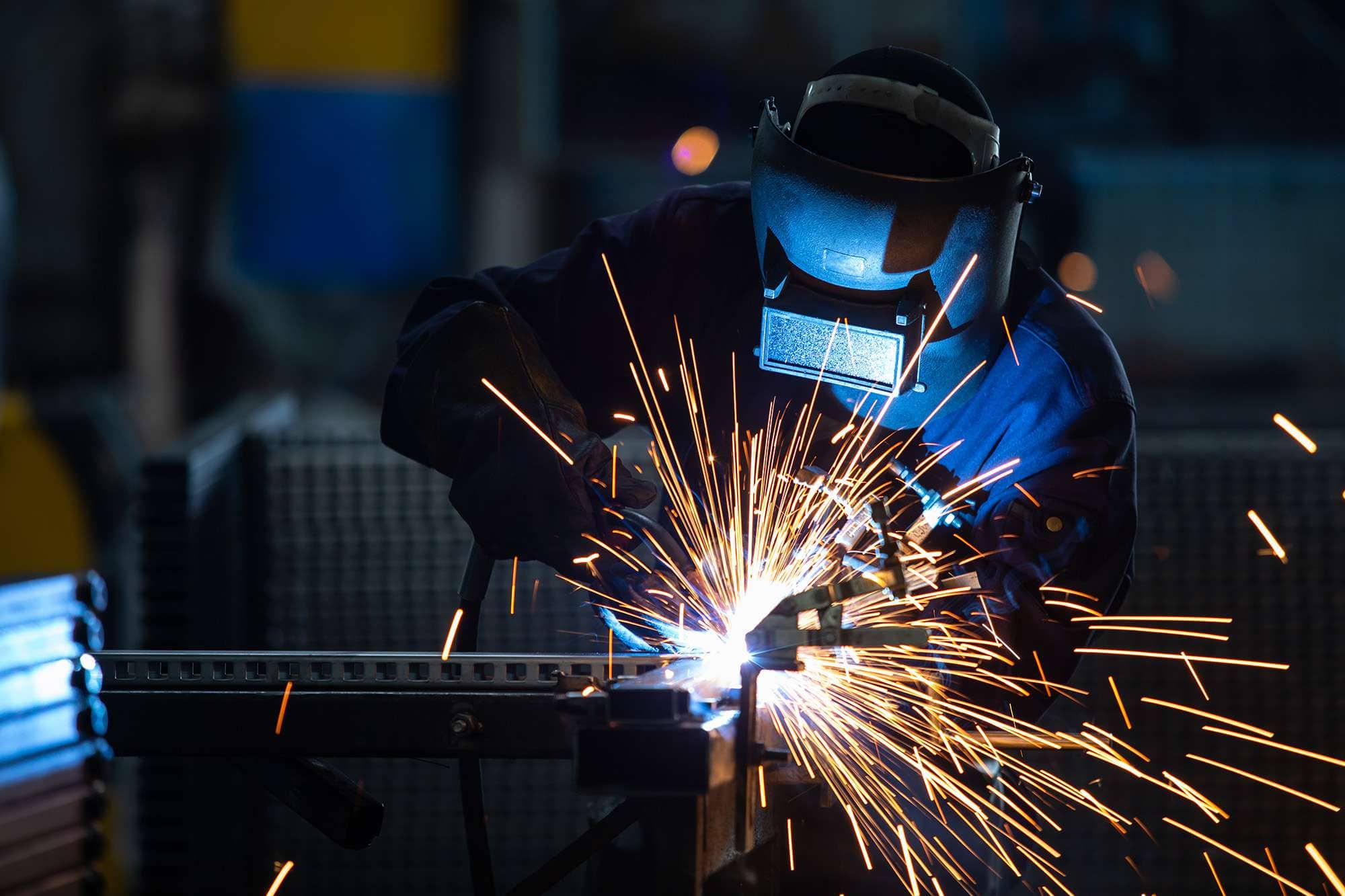
Welders all over the world are tasked with finding the right, most effective ways to operate and optimize their welding tasks as much as possible. And when you consider the fact that there are several types of welding available, you will understand the confusion that most of them tend to face when it comes to making the right choice.
In this article, we will look into arc and gas welding – two of the most popular welding forms, to see which is better and which option welders should really consider across the board.
An Introduction To Arc Welding

So before we examine the arc gas welding comparison, let’s first try to understand what they both are and how they work.
To begin, we have arc welding – a welding process that makes use of an electrical arc to combine two or more pieces of metal. Today, arc welding is already one of the most common welding techniques in the market, and it involves the use of an electric current between the workpiece and the electrode. This action creates an immense amount of heat, which will melt the metal and form the weld pool.
With the electrode being melted, filler material is deposited into the weld joint, leading to the bond that you see with the two materials.
Major Types Of Arc Welding
The conventional arc welding process comes in different types, each of which is able to create the desired part with little to no stress. The option you choose will depend on several factors, but the most prominent arc welding variants include:
Shielded Metal Arc Welding
With SMAW, you take a coated electrode, shielding the welded area from any contamination that can come from the environment with a layer of slag that you create from the electrode’s flux coating.
Gas Metal Arc Welding
This form of arc welding makes use of a continuously fed wire electrode and a shielding gas to protect the weld pool. In most cases, shielding gas options tend to be things like carbon dioxide or argon.
Gas Tungsten Arc Welding
With GTAW, you make use of a non-consumable tungsten electrode to create your arc. You will also need a standalone filler material that you will add to the weld joint, then a shielding gas will help you to protect your weld area.
Flux-Cored Arc Welding
In FCAW, you have an arc welding form that is quite similar to gas metal arc welding. The major difference, however, is that this method makes use of a tubular wire filled with flux as opposed to the traditional solid wire electrode.
The goal here is to offer a more solid form of protection against contamination and to make sure that welding is possible in outdoor environments.
Components Of An Arc Welding Setup & How They Work
For a regular arc welding operation to run, it’s important for you to have every part of the setup ready to go. And, this involves some of these all-critical components:
You Need Somewhere To Draw Power
Easily the most important thing that has to be in place for your arc welding operation is a power source. It will create the energy you need to develop the welding arc, converting electrical energy from your local grid into the right levels of current and voltage you need for welding.
A Torch Or Electrode Holder
Depending on the type of arc welding you are working with, you might need an electrode holder or a torch. Its job will be to hold and guide the electrode as it makes its way to the workpiece. But, in some cases, this component can also provide the electrical connections you need for the electrode.
Next, The Electrode Itself
The electrode serves as a consumable material that undergoes melting in order to create your weld. In most cases, the electrode comes with the same material as the workpiece itself – or an alloy that’s compatible with it.
With the electrode, you have both the heat source and the filler material that you need to combine the pieces.
A Clamp On The Ground
This ground clamp provides a connection between the workpiece and the ground terminal of the welding machine. This way, electrical current will flow properly through the workpiece, and you will be able to form a welding arc between the workpiece and the electrode.
You Could Need Some Shielding Gas
This isn’t necessarily an important need, but it comes in handy. With a shielding gas, you will be able to protect both the electrode and the weld pool from any atmospheric contaminants that threaten the stability of your welding process overall.
An Optional Flux Components
Like the shielding gas, the flux tends to come in handy based on the type of arc welding you’re handling. Basically, this is a flux-cored wire that comes with compounds that will release gases to protect your weld pool.
If you find that the weld material has impurities, the weld pool could also come in handy to take them out as well. So, it sure comes in handy as well.
What Is Gas Welding?
So next on the arc and gas welding comparison, let’s look into gas welding itself to understand how the process works and why it is also becoming especially popular as a process. So, what is gas welding?
With gas welding, you make use of a flame that is produced by burning a mixture of fuel gas and oxygen. This creates the heat needed for the welding operation, and it is what facilitates the entire sequence.
Gas welding isn’t just one of the most popular welding forms available – it’s also one of the oldest. The advent of modern forms have caused it to diminish in popularity, but a lot of welders still appreciate it for its efficiency and relative simplicity.
For gas welding to work, the typical sequence usually goes thus:
- You combine oxygen and fuel gas, creating the combustion step that ignites the high-temperature flame.
- The combination of oxygen and fuel gas will be done in the welding torch, allowing them to properly mix and create a combustion process.
- With this combustion, a high-temperature flame is generated. In most cases, the flame can reach temperatures as high as 3,000°C (5,400°F) or even more.
- Once you have enough heat, direct the torch flame onto the workpiece, thus leading to a melt of the metal. If the need arises, you could also add filler material in the form of a wire or rod to the weld pool to make the joint stronger.
- Remember that you will need to properly protect the weld pool from interference or contamination by forces from external environments
Types of Gas Welding
Like arc welding, gas welding also comes in multiple forms. Each of these gas welding types and forms will have its specific applications and variations, with some of the most notable options including the following:
Oxy-Acetylene Welding (OAW)
This is easily one of the most common gas welding forms. Here, you combine oxygen and acetylene gas to create a flame that’s suitable for welding – a process that is very versatile, although it especially works for thin materials and applications where you need top-notch accuracy.
Oxy-Fuel Welding
This method of gas welding expands on the former by adding different processes that involve different fuel gases – from natural gas to propane to propylene and much more.
In many ways, oxy-acetylene welding is the most prominent form of oxy-fuel welding. However, you can always make use of other fuel gases based on the specific requirements and applications.
Oxy-Hydrogen Welding
Instead of acetylene, this method makes use of hydrogen gas. The gas is combined with oxygen, thus producing a high-temperature flame that makes the welding process possible.
Oxy-hydrogen welding is renowned for its ability to also achieve high temperature levels. And in many cases, it works for specialized applications too – making jewelry, enhancing lab work, etc.
Air-Acetylene Welding
This is actually a type of oxy-acetylene welding that focuses on using compressed air as opposed to just pure oxygen. It relies on a lower flame temperature, but it still works to produce enough heat to enable welding operations. For working with thin materials – and in cases where you might not have enough oxygen – this process is perfect.
Advantages of Arc Welding
The arc welding process is quite impressive overall, and it offers a myriad of benefits for anyone looking to engage it. With benefits such as the ones below, it’s no wonder that the method has become one of the most sought after forms of material welding:
It’s Very Flexible
Versatility is one of the major reasons why arc welding has become so notable. You can use it with different metals and alloys, and it works in different industries too.
Speed Is Impressive
Another major benefit of arc welding is the fact that the process allows for quicker welding – especially compared to many other techniques. So, you can optimize productivity as much as possible.
Thickness Isn’t An Issue Here
Also an offshoot of the versatility benefit, arc welding works with materials of different thicknesses. Whether it’s a thin sheet or a thick plate, it can be arc-welded.
You Can Use The Process Anywhere
With relatively portable equipment, arc welding is a process that can be used just about anywhere. Even in the most remote sites, you can engage in arc welding and enjoy its benefits.
Control Everything In Your Setup
Thanks to the advanced control features that you get from them, most modern arc welding machines make it easy for you to adjust parameters such as wire speed and current. So, you can be as precise as you’d like.
Weld Unconventional Metal Combinations
Another interesting benefit here is the fact that you can use arc welding to join metals that aren’t so similar. For industries where you need to work with different metal options, this is very critical.
Only Use Shielding Gas If Needed
As we pointed out, some forms of arc welding – such as FCAW and SMAW – actually don’t need any external shielding gases. This makes their setup much simpler and easier to handle.
Advantages of Gas Welding

So like we said earlier, there’s been a lot of comparison on gas welding vs arc welding. And to be fair, gas welding has become less notable these days. Still, this isn’t to say that the method doesn’t provide a few benefits of its own.
Let’s take a look at some of these benefits and what they entail:
The Tools Can Easily Be Moved
Portability is one major benefit that you stand to gain with gas welding. The tools needed are light, so you can easily move them around and make quick repairs if the need arises.
The Process Is Flexible Too
You also get a lot of flexibility and versatility when it comes to gas welding. You can use the process to weld different metals and alloys, so it works in various industries too.
Nothing Is Really Complex Here
One of the major reasons why welders seem to love gas welding is that the process is pretty simple to implement. Just about anyone can learn the process, and operating it is also a breeze.
You Don’t Need An External Power Source
Since the process doesn’t rely on electricity, you can make use of it whenever you find that electrical power isn’t available. This is especially great if you need to weld in remote locations.
The Electrodes Aren’t Consumanble
Unlike some other welding processes, the electrodes in gas welding are usually oxygen and gas. These are non-consumable, and it means that you can generally cut down on things like operating costs.
The Heat Input Is Pretty Low
Compared to some other welding processes, you don’t get much in terms of high heat input when it comes to gas welding. When welding thin materials, you will find that this is especially beneficial.
Arc Welding vs. Gas Welding: Which Method Is Faster?
Now that we are clear on what gas welding means and how arc welding can work, let’s move forward to understand the differences between them. First on the line, we have speed – a major factor to be considered when choosing a welding process.
In this part of the arc vs gas welding, we should note that arc welding takes the prize. This is for several reasons.
First, the fact that arc welding produces more heat compared to gas welding means that you can melt your workpieces faster and get the work done. At the same time, you tend to enjoy higher welding speeds with this method, and the setup time is also pretty quicker.
Add this to the fact that you need less preheating and can clean up much faster, and you will find that many of the processes that usually take time when it comes to welding are streamlined with the arc welding process. All of these contribute to the process being relatively faster.
Several factors can affect speed still, but on a base level, this part of the gas vs arc welding debate goes to arc welding.
Arc Welding vs. Gas Welding: Differences In Heat Source
Next on the comparison between gas welding vs electric welding, we should also note the differences that exist between the heat sources.
When it comes to arc welding, the major source of heat is an electric arc that is formed between the workpiece and the electrode. You create this arc by establishing an electrical circuit between the workpiece and the power source, and then electrical current bridges the gap between them when they are brought closer.
On the flip side, gas welding will need fuel gas and oxygen to combust in order to produce flame or heat. You can have fuel gases such as acetylene, although natural gas, propane, and propylene can also be used too. As long as they are controlled and properly ignited, then you shouldn’t have much of an issue.
At the end of the day, there’s not necessarily a winner in this section of the debate between arc welding and gas welding. The gas welding temperature is pretty solid on its own, and as long as the temperature of a welding arc is sufficient, you should be able to properly weld your workpiece and create the proper mix.
Arc Welding vs. Gas Welding: Which Welding Method Is Safer?

Because welding generates a lot of heat and is an industrial process, you can understand the importance of protecting yourself. And when choosing between arc gas welding, you want to do so with safety in mind as well.
So, how do arc and gas welding compare on this front?
The Safety Components Of Arc Welding
In most cases, the biggest threats you have to worry about when it comes to arc welding revolve around electrocution, arc radiation, and possible exposure to harmful fumes.
Because arc welding uses electric currents to work, you need to follow proper procedures to avoid any shocks. Insulated gloves, proper clothing, and strong footwear are needed here.
As for arc radiation, this involves the risk of photokeratitis that can be caused by the light emitted by the welding arc. So, welders need to be careful and wear proper protective gear for their eyes.
As for the risk of fumes, ensure that proper ventilation is implemented so that you can dissipate materials like ozone, metal oxides, and more that can cause contamination.
How Gas Welding Performs With Safety
As for gas welding, you mostly need to worry about the flammable gases that are used in the process. Propane, acetylene, etc. can always pose a risk hazard, and this means that you need to be especially careful when handling them.
Another major risk is flashbacks. These occur when a flame moves back into the welding torch or gas hose, possibly reaching the cylinders. If this happens, you could risk an explosion. This is why you need to check your valves and install flashback arrestors.
Finally, make sure to run through your process again to make sure that you properly use your gas cylinders. This way, you don’t run the risk of explosions and can generally stay safe.
Overall, both methods have their potential risks and hazards. And, ensuring that you have the right handling processes will go a long way in helping you to stay safe.
Technical Analysis of Weld Strength and Integrity
Now that we understand how both processes work, let’s quickly run through a few important metrics that tend to be brought up whenever you compare them together. This should help you to better understand how the processes work and what they have going for them:
| Technical Aspect | Arc Welding | Gas Welding |
| Where Do They Get Heat? | An electric arc | Combustion, which leads to a flame |
| The Introduction Of Heat | Heat intensity tends to be high | You get moderate heat intensity here |
| Comparing Penetration Depth | Usually varies, especially based on the welding parameters | Overall, penetration depth is usually limited |
| The Strength Of The Weld | Usually high. Again, this depends on your parameters | Welds are fine, but usually not as strong as arc welding |
| Any changes In Metallurgy? | The high heat can indeed cause metallurgical changes | Usually feer changes since heat input isn’t so high |
| Are There Distortion Risks? | You get higher risks of distortion since heat input it higher | Not so high distortion risk due to a lower input of heat |
| How The Weld Looks | Usually uniform and clean overall | You might notice some irregularities in the surface |
| What Material Thickness Works Here? | You can use the process for different thicknesses | In most cases, the process works for thinner materials |
How to Choose the Right Welding Technique

So with everything that’s been said, how do you decide between arc and gas welding when it comes down to choosing? Well, here are a few things you might want to keep in mind:
Understand What Is Needed
First, look into the particular requirements of your project and what success here will entail. Everything – from the type of material you are working with to the weld quantity – needs to be known.
Find Out If The Process Works With The Material
Next, determine the type of material you are working with and if it is compatible with the process you want to go with. This way, you can avoid a bunch of potential operational issues.
What Resources Will You Need?
Gas and arc welding require a whole different set of tools and resources. So, as long as it is compatible with your material, you can choose a process that works with your specific available resources and can accommodate them.
Think About Your Budget Too
Resources cost money. And when it comes to welding, you have a lot to get. So, we recommend that you work with a process that is cost-effective and which will allow you to easily optimize expenses as much as possible.
Is The Process Productive?
As part of understanding costs, you also need to determine if a process you’re working with is effective or not. This considers things like welding speed and other parameters, and it allows you to know if you’re working at full capacity here.
Remember To Be Safe
Your safety is paramount here. So, keep an eye out for potential risks and make sure that you are properly covered.
Conclusion
At the end of the day, both arc and gas welding have their strong points. The most important thing is for you to understand what you are trying to achieve and look for the method that best fits the bill. Once you do, everything else becomes pretty easy.
If you need any additional help, feel free to reach out to us at HM. We will be more than happy to listen to you and help you out.